CKD Online Editorial Team
Last Updated: July 21, 2026 • Reading Time: 7 min
Discovering that you or a loved one is facing advanced chronic kidney disease or approaching end-stage renal disease (ESRD) can be a profoundly overwhelming experience. The kidneys are the body’s unsung heroes, working around the clock to filter waste, balance fluids, regulate blood pressure, and stimulate red blood cell production. When they approach complete failure, the entire body feels the impact.
However, a diagnosis of kidney failure is not the end of the road. With modern advancements in kidney failure treatment, integrated medical management, and targeted nutritional therapies, it is entirely possible to manage the condition effectively, preserve your quality of life, and take proactive control of your health journey. This comprehensive guide breaks down the standard treatment pathways, emerging options, and the crucial steps you can take to support your renal system today.
What Happens When Kidneys Fail?
Kidney failure, also known as Stage 5 Chronic Kidney Disease (CKD) or End-Stage Renal Disease (ESRD), occurs when the kidneys lose more than 85% to 90% of their normal functioning capacity. At this point, the estimated Glomerular Filtration Rate (eGFR) drops below 15 mL/min.
Without adequate filtration, waste products like urea and creatinine build up rapidly in the bloodstream—a toxic condition known as uremia. This accumulation triggers severe systemic symptoms, including extreme fatigue, persistent nausea, fluid retention (edema) in the limbs and lungs, metal taste in the mouth, and dangerous shifts in electrolyte balances. Because the kidneys can no longer sustain life on their own, finding the right kidney failure treatment becomes an immediate priority.
Standard Medical Pathways for Kidney Failure Treatment
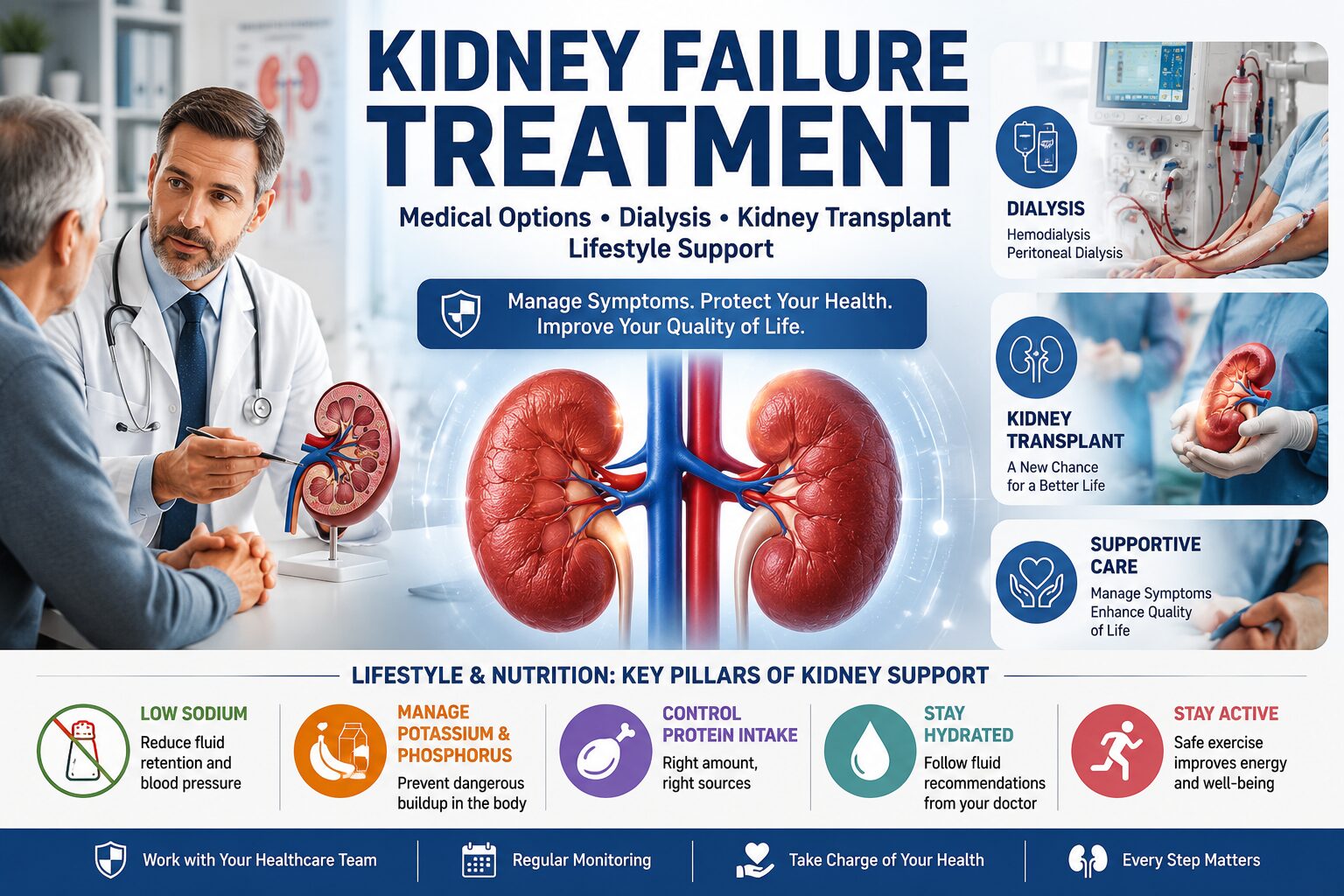
When dealing with advanced kidney failure, conventional medicine relies on three main therapeutic pathways to replace the lost filtering function of the organs.
1. Hemodialysis
Hemodialysis is the most common form of renal replacement therapy. During this procedure, blood is drawn from a specialized access point in your body (usually an AV fistula or graft in your arm) and circulated through an external machine called a dialyzer, or “artificial kidney.”
-
How it works: The dialyzer filters out toxins, balances electrolytes, and removes excess fluids before pumping the cleaned blood back into your body.
-
Schedule: Typically performed at a dialysis center three times a week, with each session lasting between three to four hours. Home hemodialysis is also an option for some patients, offering greater scheduling flexibility.
2. Peritoneal Dialysis
Peritoneal dialysis uses the natural lining of your abdomen—the peritoneum—as the filter to clean your blood inside your body.
-
How it works: A surgeon places a permanent catheter into your abdomen. A sterile cleansing fluid (dialysate) is washed into the abdomen, where it absorbs waste products and excess fluid from the surrounding blood vessels. After a few hours, the fluid is drained out and replaced.
-
Types: Continuous Ambulatory Peritoneal Dialysis (CAPD) is done manually multiple times a day, while Continuous Cycling Peritoneal Dialysis (CCPD) utilizes a machine at night while you sleep. This option allows for more dietary freedom and independence compared to traditional hemodialysis.
3. Kidney Transplantation
For many qualified individuals, a kidney transplant represents the gold standard of kidney failure treatment.
-
The Process: A healthy kidney from a living or deceased donor is surgically placed into your lower abdomen. The new kidney takes over all the filtration and hormone-production duties of your failing organs.
-
The Caveat: While a transplant offers the highest quality of life and longevity, patients must take lifelong immunosuppressant medications to prevent their body from rejecting the new organ, and waiting lists for deceased donors can take several years.
Supportive Care and Conservative Management
For some individuals—particularly elderly patients or those with severe co-existing health conditions—traditional dialysis or transplantation may not be the optimal path. In these cases, conservative management or supportive care is chosen.
This treatment pathway focuses entirely on managing symptoms, maintaining comfort, and maximizing quality of life without utilizing invasive renal replacement therapies. It involves aggressive pharmaceutical management of symptoms, strict blood pressure regulation, and highly customized dietary interventions to minimize uremic toxin buildup.
Critical Lifestyle and Dietary Pillars for Advanced Kidney Support
Regardless of which medical kidney failure treatment path you and your nephrologist choose, medical intervention alone is only half the battle. Your daily habits, nutrition, and metabolic choices serve as the fundamental groundwork that dictates how heavily your remaining renal structures are strained.
The Power of Advanced Renal Nutrition
When kidney function is severely compromised, the food you consume directly impacts the amount of toxic waste accumulating in your blood. An optimal renal protocol requires strict adjustment of several key elements:
-
Sodium Restriction: Excessive sodium causes severe fluid retention, swelling, and dangerous spikes in blood pressure. Keeping sodium intake below 2,000 mg per day eases the workload on your cardiovascular and renal systems.
-
Phosphorus and Potassium Management: Failing kidneys struggle to excrete these vital minerals. High phosphorus leaches calcium from your bones, causing severe itching and brittle skeletal structures. High potassium can cause dangerous, irregular heart rhythms. Avoiding processed foods with phosphate additives and managing high-potassium fruits and vegetables is crucial.
-
Protein Optimization: While protein is necessary to prevent muscle wasting, processing protein creates urea. A carefully controlled, high-quality, or plant-focused protein intake minimizes the generation of uremic toxins, providing your kidneys with structural relief.
Taking Proactive Control of Your Renal Health
Facing the realities of advanced kidney decline can easily make a person feel powerless, trapped in a cycle of frequent lab tests, doctor visits, and daunting medical procedures. However, it is vital to understand that your body retains an incredible capacity for resilience when provided with the correct internal environment.
Relying solely on external machines or waiting passively on transplant lists ignores the immense impact that proactive, targeted cellular support can have on your daily energy levels, systemic comfort, and overall cellular longevity. By complementing your doctor’s prescribed medical treatments with a scientifically validated, holistic kidney restoration protocol, you can actively reduce metabolic toxic stress, manage common complications naturally, and restore your baseline vitality.
If you are looking for a complete, structured, and easy-to-follow guide designed to help you optimize your renal diet, lower systemic inflammation, naturally support cellular filtration, and reclaim your independence throughout your kidney care journey, specialized guidance is readily available.
🛑 Empower Your Kidneys and Reclaim Your Life Today
Managing advanced kidney complications requires more than just reactive medical checkups. Do not let kidney issues dictate your future—take matters into your own hands by giving your body the specialized nutritional strategies, cellular support, and therapeutic protocols it needs to thrive.
Actionable Steps for Navigating Kidney Care Successfully
To ensure you are achieving the best possible health outcomes while undergoing kidney failure treatment, make these foundational practices a consistent part of your routine:
-
Maintain an Open Dialogue with Your Care Team: Understand your specific lab trends. Keep a close eye on your eGFR, serum creatinine, Blood Urea Nitrogen (BUN), potassium, and phosphorus levels during every checkup.
-
Strictly Eliminate Nephrotoxins: Avoid over-the-counter Non-Steroidal Anti-Inflammatory Drugs (NSAIDs) like ibuprofen or naproxen, which act as direct toxins to compromised kidney tissues. Always verify the safety of any supplement or over-the-counter medicine with your nephrologist.
-
Prioritize Cardiovascular Health: Because the heart and kidneys are intricately connected, strictly managing your blood pressure (typically targeting below 130/80 mmHg or as directed by your physician) is one of the most effective ways to preserve remaining vascular tissue.
By integrating cutting-edge medical care with dedicated, proactive self-care at home, you can confidently navigate the challenges of advanced kidney disease, safeguard your well-being, and enjoy a vibrant, fulfilling life.

CKD Online Editorial Team reviews all medical content to ensure accuracy, clarity, and alignment with current clinical guidelines. Articles are updated regularly to reflect the latest evidence-based recommendations.