CKD Online Editorial Team
Last Updated: July 21, 2026 • Reading Time: 7 min
When you or a loved one is diagnosed with Chronic Kidney Disease (CKD), the medical jargon can quickly become overwhelming. You hear terms like eGFR, creatinine, and uremia, and it is easy to feel like control of your health has slipped out of your hands. However, there is one incredibly powerful therapeutic tool that you control completely every single day: your plate.
An optimized kidney ckd treatment diet is not just about “eating healthy.” It is a precise, targeted strategy designed to reduce the workload on your remaining kidney filters (nephrons), manage waste buildup in your blood, and actively slow down the progression of kidney disease. Whether you are in the early stages of CKD or managing advanced renal decline, understanding how nutrition impacts your kidneys is the cornerstone of effective treatment.
The Crucial Role of Nutrition in CKD Management
Your kidneys act as your body’s internal filtration plant, working 24/7 to remove toxins, balance minerals, regulate fluid levels, and produce vital hormones. When chronic kidney disease damages these delicate structures, they can no longer process waste efficiently.
If you continue to consume a standard modern diet, metabolic waste products accumulate in the bloodstream, leading to a toxic state known as uremia. This buildup causes common symptoms like chronic fatigue, brain fog, nausea, and fluid swelling (edema). By adopting a specialized kidney ckd treatment diet, you change the chemistry of what enters your body, giving your kidneys a breathing room to function effectively without being structurally overloaded.
The Four Golden Pillars of a Renal Diet
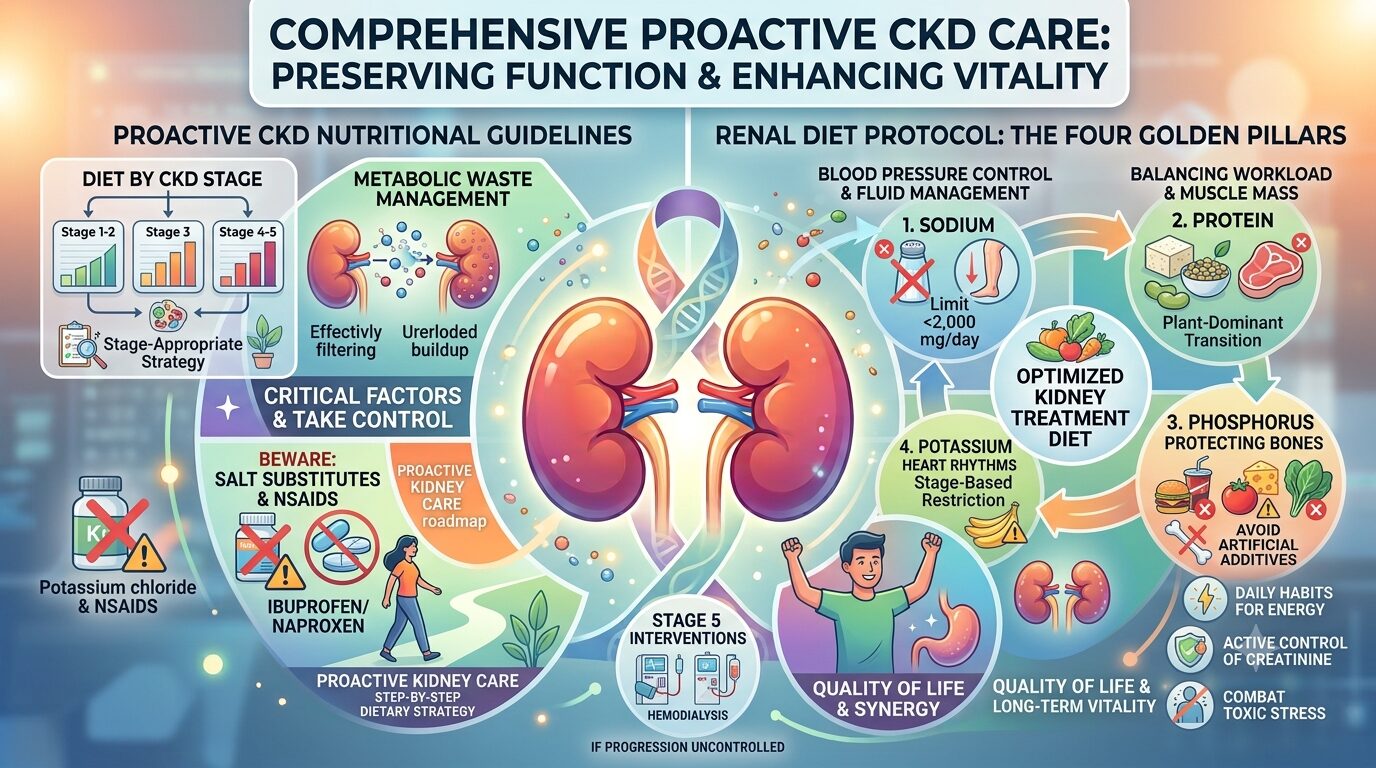
A successful kidney diet revolves around managing four key components: sodium, protein, phosphorus, and potassium. The exact restrictions you need depend heavily on your specific stage of CKD and your latest laboratory blood work.
1. Sodium: Controlling Blood Pressure and Fluid Retention
Sodium is the primary regulator of fluid balance in the body. When kidneys are compromised, they struggle to excrete excess sodium. This causes water retention, which swells your ankles, legs, and hands, and dangerously drives up your blood pressure. High blood pressure further damages the remaining delicate blood vessels in the kidneys, creating a destructive cycle.
-
The Daily Target: Most renal protocols recommend keeping sodium intake under 2,000 mg per day (roughly one teaspoon of table salt).
-
Hidden Hazards: Avoid processed foods, canned soups, frozen dinners, deli meats, and commercial condiments, which are heavily packed with sodium as a preservative.
-
Kidney-Safe Alternatives: Season your meals with fresh herbs, garlic, onion powder, lemon juice, and sodium-free spice blends.
2. Protein: Balancing Muscle Mass and Kidney Workload
When your body metabolizes protein, it creates a waste product called urea. Healthy kidneys easily filter this out, but damaged kidneys choke under the burden. In the early and moderate stages of CKD, eating too much protein acts like an accelerator for kidney decline.
-
The Strategy: Transition to a controlled, moderate-to-low protein intake based on your body weight.
-
The Plant-Dominant Shift: Modern nephrology strongly advocates for a “plant-dominant” approach. Sourcing your protein from plant options like tofu, legumes, and specific grains places significantly less metabolic stress on your kidney filters than red meat, while producing fewer harmful uremic toxins.
3. Phosphorus: Protecting Bones and Mitigating Skin Itching
As kidney function drops, phosphorus accumulates in the bloodstream. High phosphorus levels signal the body to pull calcium directly out of your skeletal system, making your bones weak and brittle while calcifying your blood vessels. It also triggers intense, deep skin itching that lotions cannot fix.
-
Avoid Artificial Phosphates: You must completely avoid chemical phosphate additives found in fast food, processed cheeses, packaged baked goods, and dark colas. The human body absorbs nearly 100% of these chemical additives.
-
Better Options: Focus on fresh, whole foods, un-enriched grains, and plant-based milks that do not list “phosphate” ingredients on the label.
4. Potassium: Regulating Heart Rhythms
Potassium is essential for muscle and nerve health, but when the kidneys fail to regulate it, levels can spike dangerously (hyperkalemia). High potassium can cause muscle weakness and, most critically, dangerous cardiac arrhythmias.
-
When to Restrict: Potassium limitations typically become vital in Stages 3b, 4, and 5 of CKD.
-
High-Potassium Foods to Limit: Bananas, oranges, avocados, tomatoes, potatoes, and spinach.
-
Low-Potassium Alternatives: Apples, berries, grapes, pineapples, carrots, and green beans.
Customizing Your Diet by CKD Stage
Because kidney health exists on a spectrum, your dietary approach must adapt alongside your changing lab numbers.
| Nutritional Component | Stages 1–2 (Mild Damage) | Stage 3 (Moderate Damage) | Stages 4–5 (Severe / Pre-Dialysis) |
| Sodium Management | Monitor and limit excess | Strict restriction (<2,000 mg/day) | Strict restriction + fluid intake tracking |
| Protein Guidelines | Normal to moderate intake | Controlled (~0.6–0.8g per kg of body weight) | Low protein (~0.55–0.6g per kg of body weight) |
| Phosphorus Focus | Generally unrestricted | Avoid artificial additives | Strict control; potential use of binder medications |
| Potassium Control | Unrestricted unless labs show elevation | Monitor closely via routine blood panels | Heavy restriction tailored to direct lab results |
Critical Factors to Keep in Mind
-
Beware of Salt Substitutes: Many commercial “low-sodium” salts replace sodium chloride with potassium chloride. For a CKD patient, these can trigger sudden, life-threatening spikes in potassium.
-
Watch the Painkillers: While focus is placed heavily on food, avoid damaging your filtration system with over-the-counter Non-Steroidal Anti-Inflammatory Drugs (NSAIDs) like ibuprofen or naproxen, which are directly toxic to compromised kidneys. Always use kidney-safe options under medical supervision.
Taking Proactive Control of Your Renal Health
Discovering that you need to completely overhaul your nutrition to manage chronic kidney disease can feel isolating and restrictive. Many patients find themselves trapped in a state of dietary anxiety, unsure of what is safe to cook and feeling like they are simply waiting for their kidney numbers to get worse.
However, your body possesses a remarkable capacity for stability when you give it the correct internal environment. Relying solely on standard checkups and waiting for things to change leaves a massive amount of your health potential on the table. By pairing your doctor’s standard medical advice with a comprehensive, step-by-step kidney care protocol, you can actively lower your creatinine levels, combat toxic uremic stress, and protect your remaining filtration capacity for the long term.
If you are looking for a complete, structured, and easy-to-use roadmap designed to optimize your renal diet, eliminate confusing guesswork in the kitchen, and naturally support your eGFR numbers, a specialized holistic solution can guide you every step of the way.
🛡️ Protect Your Kidney Function from the Inside Out
Your daily nutrition is your first line of defense against kidney decline. Do not wait for your condition to progress to more severe stages or complete kidney failure. Empower your body with the exact dietary strategies, cellular support, and therapeutic protocols it needs to thrive and maintain long-term vitality.
👉 Click Here to Discover the Ultimate CKD Management Program and Optimize Your Kidney Diet Today
Summary Actions for Success
Successfully managing a kidney ckd treatment diet comes down to consistency and clear tracking. Keep these key habits in place to maximize your wellness:
-
Track Your Lab Trends: Always review your eGFR, Serum Creatinine, Blood Urea Nitrogen (BUN), potassium, and phosphorus after every blood test to see exactly how your dietary shifts are helping.
-
Partner with a Professional: Whenever possible, work alongside a specialized renal dietitian who can take your exact blood panels and construct a delicious, stress-free meal plan tailored specifically for you.
-
Stay Proactive: Small, steady adjustments to your daily meals, blood pressure management, and hydration habits create an immense shield of protection for your kidneys over time.
By taking charge of your kitchen and aligning your daily nutrition with advanced kidney care strategies, you can look forward to a healthier, more independent, and vibrant future.

CKD Online Editorial Team reviews all medical content to ensure accuracy, clarity, and alignment with current clinical guidelines. Articles are updated regularly to reflect the latest evidence-based recommendations.