CKD Online Editorial Team
Last Updated: July 21, 2026 • Reading Time: 6 min
A diagnosis of Chronic Kidney Disease (CKD) can feel like a heavy burden to carry. Because the kidneys operate quietly behind the scenes, many individuals do not realize these vital organs are under stress until advanced stages. When you are told that your kidney function is declining, it is entirely normal to feel anxious about the future, dialysis, or the prospect of complex medical procedures.
However, modern nephrology combined with proactive wellness strategies has fundamentally shifted the outlook for CKD patients. A proper, multi-faceted chronic kidney treatment plan is not about sitting back and waiting for things to worsen. Instead, it is an aggressive, empowering blueprint designed to preserve your remaining kidney filters (nephrons), manage systemic complications, and slow down or even halt the progression of the disease.
The Landscape of Chronic Kidney Treatment
The kidneys are highly sophisticated filtration systems responsible for removing cellular waste, balancing systemic fluids, regulating blood pressure, and stimulating red blood cell production. When chronic damage occurs—often driven by prolonged high blood pressure, diabetes, or inflammation—the kidneys lose their efficiency.
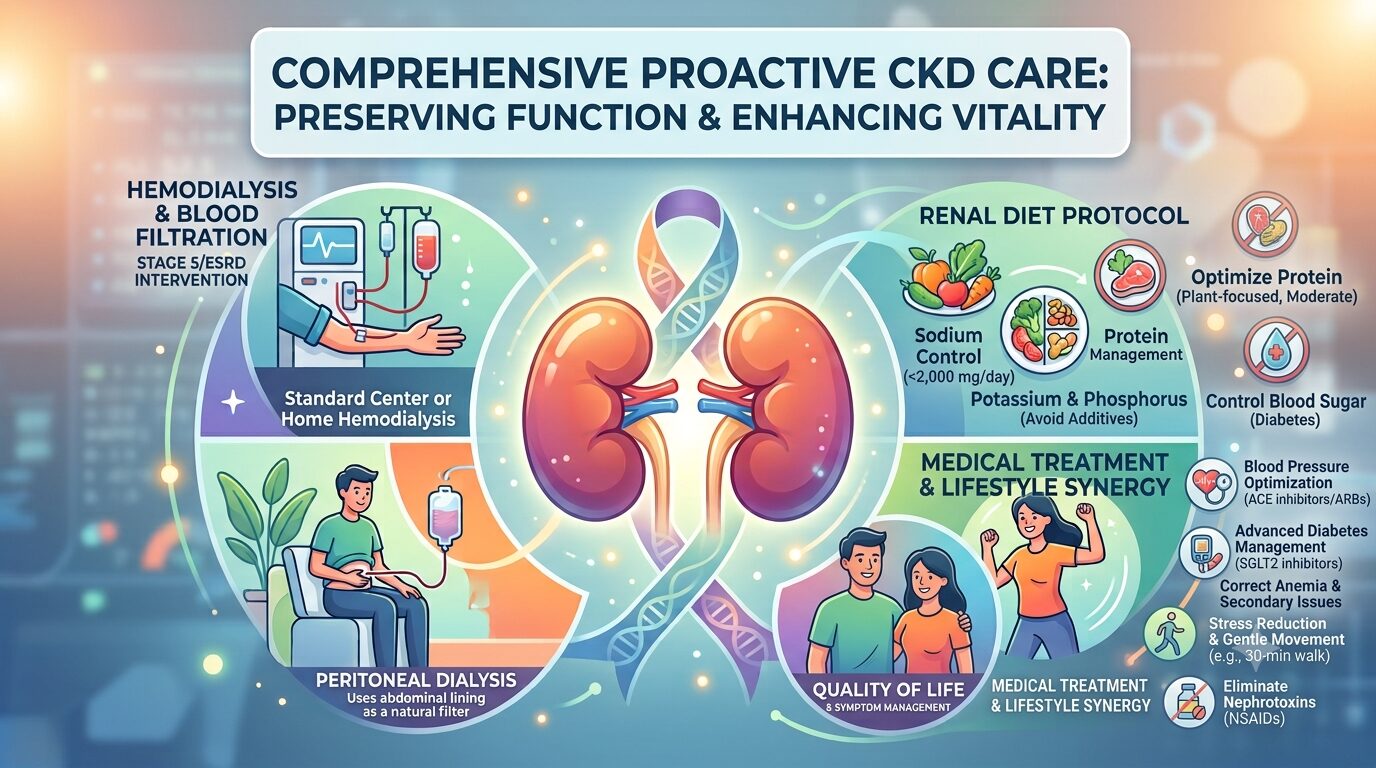
An effective chronic kidney treatment strategy changes based on your specific stage of CKD, measured by your eGFR (estimated Glomerular Filtration Rate). The treatment spectrum is broadly categorized into three core approaches:
-
Primary Medical Management: Targeting the root causes (blood pressure, blood sugar) to stop ongoing structural damage.
-
Renal Nutrition and Therapy: Altering your dietary intake to ease the mechanical workload placed on your remaining filters.
-
Renal Replacement Therapy (RRT): Late-stage interventions such as dialysis or transplantation when the kidneys can no longer sustain life on their own.
By intervening early and comprehensively, you can protect your kidneys and maintain a high quality of life without ever needing to step foot inside a dialysis center.
Frontline Medical Treatments for CKD
Conventional medical strategies focus heavily on controlling the two main drivers of chronic kidney damage: hypertension and diabetes.
1. Advanced Blood Pressure Optimization
High blood pressure damages the delicate, microscopic blood vessels inside your kidney filters. Lowering systemic pressure is the single most critical step in protecting your remaining function.
-
ACE Inhibitors and ARBs: Medications like Lisinopril or Losartan are standard cornerstones of chronic kidney treatment. They do more than just lower systemic blood pressure; they specifically dilate the blood vessels exiting the kidney, reducing internal filtering pressure and stopping the leakage of protein into the urine (proteinuria).
-
Diuretics: These help the body eliminate excess sodium and fluid accumulation, which reduces swelling (edema) in your limbs and lightens the volumetric load on your heart and vascular system.
2. Modern Glycemic Control
For individuals whose kidney damage stems from diabetes, managing blood glucose is vital. High blood sugar structurally alters and weakens the filtration barriers over time.
-
SGLT2 Inhibitors: Originally designed for blood sugar management, medications such as dapgliflozin have become revolutionary in kidney care. Clinical data reveals they dramatically reduce the risk of progressing to kidney failure by lowering mechanical stress and inflammation within the kidney tissue itself, regardless of diabetic status.
3. Correcting Secondary Complications
As kidney function declines, the organs produce less of a hormone called erythropoietin, leading to chronic fatigue caused by anemia. Medical treatments often include iron supplements or hormone-stimulating therapies to restore red blood cell levels and bring back your daily energy.
The Nutritional Foundation of Kidney Care
While advanced pharmaceuticals are incredibly important, pills alone cannot fix a toxic internal environment. What you eat acts as a direct, daily form of treatment that either strains your kidneys or allows them to rest. A specialized renal diet focuses on managing four critical variables:
-
Sodium: Restricting intake to less than 2,000 mg per day helps control blood pressure and eliminates uncomfortable fluid retention.
-
Protein: Shifting toward a moderate, plant-focused protein protocol reduces the generation of urea—a toxic waste product that damaged kidneys struggle to clear. Plant proteins place significantly less metabolic stress on your nephrons than processed or red meats.
-
Phosphorus: Avoiding artificial phosphate additives (found in processed cheeses, fast food, and dark colas) protects your bone density and prevents severe skin itching.
-
Potassium: Keeping a close eye on potassium levels through regular lab work prevents dangerous heart rhythm irregularities (hyperkalemia).
Breaking Free from Passive Medical Care
One of the biggest frustrations patients face throughout their chronic kidney treatment journey is the passive “wait and see” approach often adopted by standard clinical checkups. Being told to simply watch your eGFR decline numbers drop month after month can leave you feeling completely powerless.
But you do not have to accept a passive approach to your health. Your body has an incredible capacity for resilience and stabilization when it is provided with the correct structural support, internal chemistry, and cellular nutrition. By combining your doctor’s standard pharmaceutical prescriptions with a comprehensive, scientifically validated holistic protocol, you can actively reduce harmful uremic toxins, naturally manage creatinine levels, and support your kidneys from the comfort of your own home.
If you are searching for a step-by-step, easy-to-navigate roadmap designed to optimize your daily renal nutrition, naturally lower systemic inflammation, and provide your kidneys with the exact therapeutic support they need to maintain long-term function, a specialized holistic solution can guide you forward.
🛡️ Take Active Control of Your Kidney Health Today
Your kidneys are fighting for you every single day—it is time to give them the precise support they deserve. Do not wait for your condition to decline into advanced stages or complete kidney failure. Empower your body with the targeted strategies, nutritional protocols, and specialized solutions engineered to protect your longevity.
👉 Click Here to Discover the Ultimate Advanced CKD Management Program and Support Your Kidneys Now
Actionable Steps for Long-Term Wellness
Navigating the complexities of chronic kidney care requires consistency and deliberate lifestyle habits. To achieve the best possible outcomes, integrate these core practices into your daily routine:
-
Track Your Lab Biomarkers: Always request copies of your blood panels. Keep a dedicated log of your eGFR, serum creatinine, Blood Urea Nitrogen (BUN), potassium, and phosphorus to see exactly how your self-care adjustments are paying off.
-
Strictly Avoid Nephrotoxins: Protect your filtering units by completely eliminating over-the-counter Non-Steroidal Anti-Inflammatory Drugs (NSAIDs) like ibuprofen or naproxen, which act as direct toxins to compromised kidney tissues. Always consult your nephrologist before taking any new supplement or over-the-counter medicine.
-
Prioritize Stress Reduction and Gentle Movement: Moderate physical activity, such as a 30-minute daily walk, improves cardiovascular circulation, balances blood sugar, and lowers systemic blood pressure, directly protecting your kidneys from vascular wear and tear.
By marrying the absolute best of cutting-edge chronic kidney treatment options with proactive, mindful lifestyle changes at home, you can successfully shield your kidney function, reclaim your physical vitality, and confidently look forward to a vibrant, independent future.

CKD Online Editorial Team reviews all medical content to ensure accuracy, clarity, and alignment with current clinical guidelines. Articles are updated regularly to reflect the latest evidence-based recommendations.