CKD Online Editorial Team
Last Updated: September 1, 2026 • Reading Time: 12 min
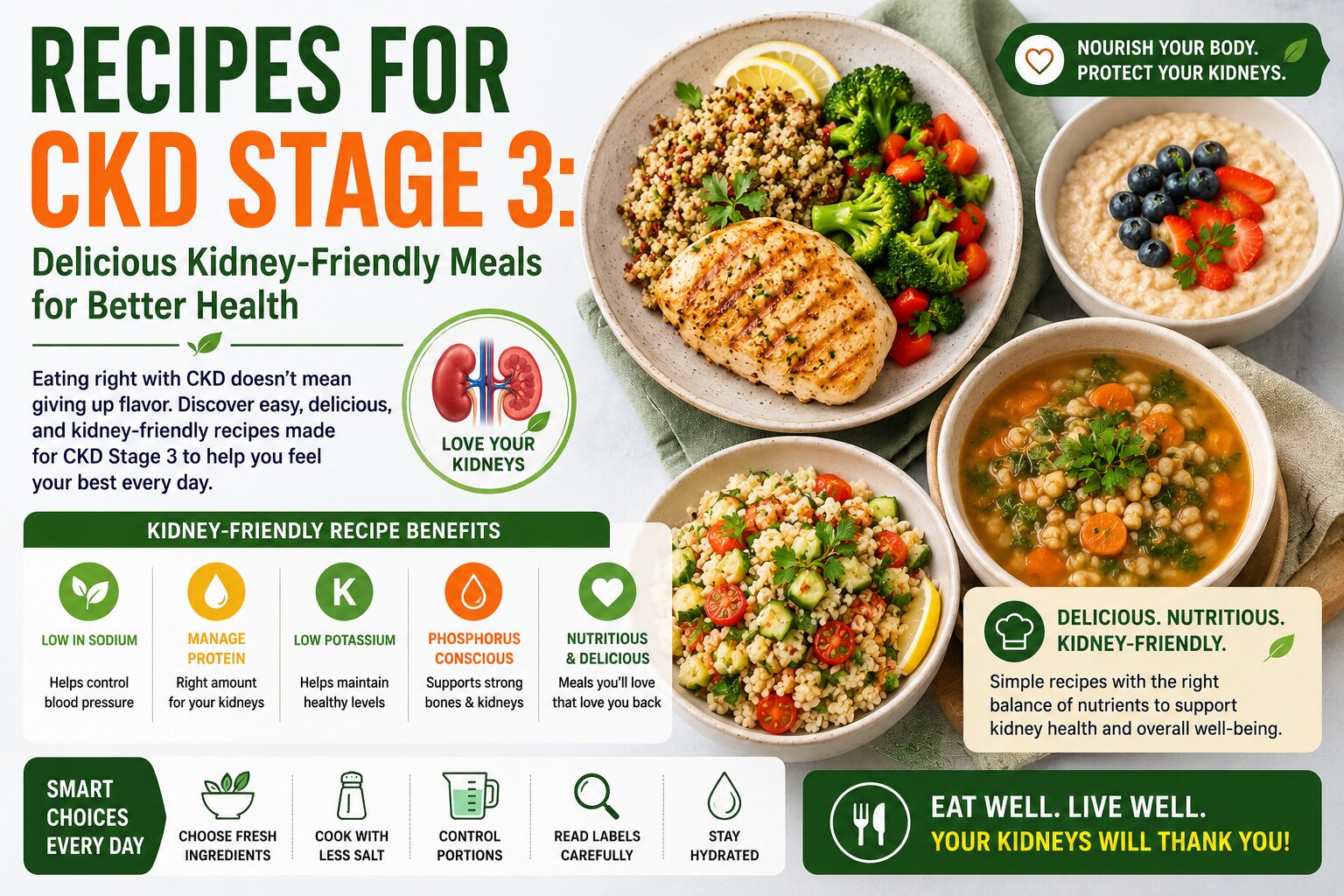
Recipes for CKD Stage 3: Delicious Kidney-Friendly Meals for Better Health
Living with chronic kidney disease (CKD) stage 3 often means becoming more careful about everyday food choices. As kidney function declines, the body may have more difficulty maintaining the proper balance of fluids, minerals, and waste products.
For many people, learning how to prepare nutritious meals at home can make healthy eating easier and more enjoyable.
The good news is that a kidney-conscious eating pattern does not have to be boring. With fresh ingredients, appropriate portions, flavorful herbs, and simple cooking techniques, you can enjoy satisfying breakfasts, lunches, dinners, and snacks.
In this guide, you’ll discover delicious recipes for CKD stage 3, practical meal-planning tips, ingredients to consider, and useful kitchen products that can make preparing kidney-conscious meals easier.
Important: CKD nutrition is highly individualized. Your recommended amounts of sodium, protein, potassium, phosphorus, and fluids may depend on your kidney function, laboratory results, medications, diabetes status, blood pressure, and other health conditions. Always discuss major dietary changes with your doctor or a registered dietitian.
 Understanding Stage 3 CKD
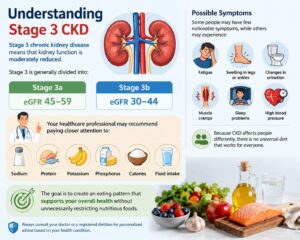
Stage 3 chronic kidney disease means that kidney function is moderately reduced.
Stage 3 is generally divided into:
- Stage 3a: eGFR 45–59
- Stage 3b: eGFR 30–44
Some people with stage 3 CKD have few noticeable symptoms, while others may experience fatigue, swelling, changes in urination, muscle cramps, sleep problems, or high blood pressure.
Because CKD affects people differently, there is no universal diet that works for everyone.
Your healthcare professional may recommend paying closer attention to:
- Sodium
- Protein
- Potassium
- Phosphorus
- Calories
- Fluid intake
The goal is to create an eating pattern that supports your overall health without unnecessarily restricting nutritious foods.
Why Diet Matters for CKD Stage 3
Your kidneys play an important role in removing waste and maintaining the body’s balance of fluids and minerals.
When kidney function is reduced, dietary choices can become more important.
A personalized eating plan may help you:
- Manage sodium intake
- Support healthy blood pressure
- Maintain appropriate nutrition
- Manage blood sugar
- Control portion sizes
- Reduce highly processed foods
- Support cardiovascular health
Cooking at home can be particularly useful because you have greater control over the ingredients and seasonings.
 Important Nutrients to Consider
Sodium
Sodium is one of the nutrients commonly monitored in CKD.
Too much sodium can contribute to fluid retention and increased blood pressure.
Instead of relying heavily on salt, consider flavoring meals with:
- Garlic
- Fresh herbs
- Black pepper
- Lemon juice
- Vinegar
- Onion
- Salt-free seasonings
Reading food labels can also help you identify foods that contain large amounts of sodium.
Recommended Product: Low-Sodium Recipe Resources
If you are looking for additional recipe inspiration, a low-sodium cookbook can make it easier to experiment with different flavors and meal ideas.
Browse low-sodium cookbooks on Amazon
Affiliate disclosure: If you purchase through an affiliate link, this website may receive a commission at no additional cost to you.
Protein
Protein is important for maintaining muscle and supporting normal body functions.
However, some people with CKD may be advised to moderate protein intake. The appropriate amount varies from person to person.
Potential protein foods may include:
- Fish
- Skinless chicken
- Eggs or egg whites
- Tofu
- Other protein sources recommended by your dietitian
Rather than eliminating protein, focus on appropriate portions.
 Potassium
Potassium requirements are highly individualized.
Some people with CKD need to limit potassium, while others may not.
Foods that can contain significant amounts of potassium include:
- Bananas
- Potatoes
- Tomatoes
- Oranges
- Avocados
- Spinach
Depending on your blood potassium level and medical advice, alternatives may include foods such as:
- Apples
- Blueberries
- Grapes
- Cabbage
- Cauliflower
- Cucumbers
Do not automatically eliminate potassium-rich foods unless your healthcare professional has recommended doing so.
Phosphorus
Phosphorus may also need to be monitored in some people with CKD.
Processed foods can contain phosphorus additives, so checking ingredient labels can be helpful.
If your doctor or dietitian has recommended phosphorus restriction, look for phosphorus-containing ingredients and discuss your individual target with your healthcare team.
7 Easy Recipes for CKD Stage 3
The following recipes are general meal ideas rather than individualized medical prescriptions.
Portions and ingredients may need to be changed depending on your personal nutrition plan.
1. Blueberry Cinnamon Oatmeal
Ingredients
- ½ cup rolled oats
- ¼ cup blueberries
- Cinnamon
- Small amount of honey, optional
- Water or an appropriate milk alternative
Instructions
- Cook the oats according to the package instructions.
- Add blueberries.
- Sprinkle with cinnamon.
- Add a small amount of honey if desired.
Why It Works
Oatmeal can provide fiber and create a satisfying breakfast without requiring salty ingredients.
Keep the portion appropriate for your individual meal plan.
2. Garlic Herb Chicken With Rice
Ingredients
- Skinless chicken breast
- Cooked white rice
- Olive oil
- Garlic powder
- Dried parsley
- Black pepper
- An appropriate vegetable
Instructions
- Lightly brush the chicken with olive oil.
- Season with garlic powder, parsley, and black pepper.
- Cook the chicken thoroughly.
- Serve with rice and an appropriate vegetable.
Why It Works
This simple meal gives you control over the amount of sodium and protein.
3. Creamy Cauliflower Mash
Ingredients
- Fresh cauliflower
- Olive oil
- Garlic powder
- Black pepper
Instructions
- Steam cauliflower until tender.
- Drain thoroughly.
- Mash or blend until smooth.
- Add olive oil and seasonings.
- Serve warm.
Why It Works
Cauliflower can be useful as an alternative to potatoes for people who have been advised to manage potassium intake.
4. Herb-Baked Salmon
Ingredients
- Salmon fillet
- Olive oil
- Fresh herbs
- Lemon juice
- Black pepper
Instructions
- Place salmon on a baking tray.
- Add olive oil and lemon juice.
- Season with herbs and black pepper.
- Bake until completely cooked.
- Serve with an appropriate vegetable or grain.
Why It Works
Salmon provides protein and omega-3 fatty acids.
Because protein requirements differ in CKD, use a serving size appropriate for your personal nutrition plan.
5. Cabbage and Cucumber Salad
Ingredients
- Shredded cabbage
- Sliced cucumber
- Olive oil
- Vinegar
- Black pepper
- Fresh herbs
Instructions
- Combine the cabbage and cucumber.
- Add olive oil and vinegar.
- Season with black pepper and herbs.
- Toss before serving.
Why It Works
This refreshing salad can add vegetables and flavor without depending on salty bottled dressings.
6. Apple Cinnamon Snack
Ingredients
- One small apple
- Cinnamon
- Small amount of honey, optional
Instructions
- Wash and slice the apple.
- Sprinkle with cinnamon.
- Add a small amount of honey if desired.
Why It Works
Apples can make a convenient snack and provide fiber.
Your appropriate fruit choices and portions should depend on your individual potassium recommendations.
7. Lemon Herb Rice Bowl
Ingredients
- Cooked white rice
- Cabbage or another suitable vegetable
- Small portion of chicken or fish
- Olive oil
- Lemon juice
- Fresh herbs
Instructions
- Add cooked rice to a bowl.
- Add vegetables.
- Add the recommended protein portion.
- Drizzle lightly with olive oil and lemon juice.
- Finish with fresh herbs.
Why It Works
Rice bowls are easy to customize according to your individual protein and vegetable requirements.
Kitchen Tools That Can Make CKD Meal Planning Easier
Preparing meals at home becomes much easier when you have a few simple kitchen tools.
1. Digital Kitchen Scale
Portion control can be useful when your healthcare professional has recommended specific serving sizes.
A digital kitchen scale can help you measure ingredients consistently.
Shop digital kitchen scales on Amazon
A scale is particularly useful when preparing recipes where consistent portions matter.
2. Meal-Prep Containers
Preparing several meals at once can make it easier to stick to your planned meals during busy days.
Glass meal-prep containers can be useful for storing prepared portions in the refrigerator.
Browse glass meal-prep containers on Amazon
You can prepare several portions of chicken, rice, vegetables, or other foods and store them for later meals.
3. Renal Diet Cookbook
If you want more variety, a renal-focused cookbook can provide additional recipe ideas.
Search renal diet cookbooks on Amazon
There are currently many renal-diet cookbooks and meal-planning resources available online, including books focused on low-sodium recipes and kidney-conscious meal planning. However, recipes should still be adapted to your individual medical requirements.
Meal Planning Tips for Stage 3 CKD
Plan Your Meals Before You Get Hungry
Creating a weekly meal plan can help you avoid relying on fast food or highly processed meals.
Write down:
- Breakfast
- Lunch
- Dinner
- Snacks
- Grocery ingredients
- Portion sizes
Cook in Batches
Cooking several portions at once can save time.
For example, you could prepare:
- Several servings of rice
- Several portions of chicken
- Fresh vegetables
- Homemade low-sodium dressings
Then combine them into different meals throughout the week.
Read Food Labels
Check:
- Sodium
- Serving size
- Protein
- Added phosphorus ingredients
- Potassium when relevant to your diet
Ingredient lists can be particularly useful when comparing processed foods.
Use Fresh Herbs and Spices
You don’t need large amounts of salt to create flavorful food.
Experiment with:
- Garlic
- Basil
- Rosemary
- Parsley
- Oregano
- Black pepper
- Lemon
- Vinegar
A Simple 1-Day CKD Meal Plan Example
Here is a general example of how these recipes could be organized.
Breakfast
Blueberry cinnamon oatmeal.
Lunch
Garlic herb chicken with rice and an appropriate vegetable.
Snack
Apple slices with cinnamon.
Dinner
Herb-baked salmon with rice and cabbage salad.
Meal Preparation
Use a kitchen scale to maintain consistent portions and glass containers to store prepared meals.
Remember that this is only an example. Your actual meal plan should be personalized according to your kidney function and laboratory results.
Foods That May Need to Be Limited
Some foods are commonly high in sodium or phosphorus additives and may need to be limited depending on your dietary plan.
Processed Meats
Examples include:
- Bacon
- Sausage
- Hot dogs
- Deli meats
- Cured meats
Fast Food
Fast food meals can contain substantial amounts of sodium.
Packaged Snacks
Chips, processed crackers, instant meals, and similar foods can contain significant amounts of sodium.
Dark-Colored Sodas
Some cola beverages contain phosphorus additives.
Certain Salt Substitutes
Some salt substitutes contain potassium chloride.
If you have been advised to monitor potassium, ask your healthcare professional before using potassium-based salt substitutes.
More Helpful Products for Meal Planning
If you want to build a simple kidney-conscious kitchen, you don’t need dozens of specialized products.
A few practical items can be enough.
Kitchen Scale
Useful for measuring ingredients and maintaining consistent serving sizes.
Glass Food Storage Containers
Useful for preparing meals in advance.
See glass meal-prep containers on Amazon
Low-Sodium Cookbook
Useful for learning alternative ways to create flavorful meals without relying heavily on salt.
See low-sodium cookbooks on Amazon
Renal Cookbook
Useful for finding additional meal ideas, although recipes should be checked against your personal dietary requirements.
Amazon affiliate disclosure: We may earn a commission from qualifying purchases made through affiliate links.
Can Supplements Support Kidney Health?
Supplements are frequently marketed online as products for kidney health or “kidney support.”
However, people with CKD should be particularly careful before taking supplements.
A product being labeled “natural” does not automatically mean it is safe for someone with reduced kidney function.
Some ingredients can interact with medications or may be inappropriate for people with kidney disease.
A supplement should never replace:
- Prescribed medication
- Medical monitoring
- Blood pressure management
- Diabetes management
- Professional dietary advice
If you are considering a kidney-support supplement, talk with your doctor, pharmacist, or registered dietitian first.
Kidney Support Product
For readers who want to research a commercially available kidney-support formula, you can learn more about the product here:
Learn More About This Kidney Support Formula
This is an affiliate link. The product is not presented as a cure or treatment for chronic kidney disease.
Lifestyle Habits That Support Kidney Health
Nutrition is only one part of a healthy lifestyle.
Stay Physically Active
Appropriate physical activity can support cardiovascular health, fitness, and overall well-being.
Monitor Blood Pressure
High blood pressure can contribute to kidney damage.
Follow your healthcare professional’s recommendations for monitoring and managing your blood pressure.
Manage Blood Sugar
If you have diabetes, following your healthcare team’s recommendations for blood glucose management can be an important part of kidney care.
Avoid Smoking
Smoking can negatively affect cardiovascular health and may contribute to kidney disease progression.
Follow Your Fluid Recommendations
Do not assume that everyone with CKD needs to drink large amounts of water.
Some people may need to monitor or restrict fluid intake.
Follow the recommendations provided by your healthcare team.
When Should You Talk to a Kidney Dietitian?
A registered dietitian who specializes in kidney nutrition can help you create a personalized eating plan.
They may consider:
- eGFR
- Potassium
- Phosphorus
- Sodium
- Protein requirements
- Blood pressure
- Blood sugar
- Medications
- Other medical conditions
This individualized approach is important because the best diet for one person with stage 3 CKD may not be appropriate for another.
Final Thoughts
Finding delicious recipes for CKD stage 3 doesn’t have to be difficult.
Simple meals prepared with fresh ingredients can make it easier to manage your food choices while still enjoying flavorful meals.
Recipes such as blueberry oatmeal, garlic herb chicken, cauliflower mash, baked salmon, cabbage salad, and apple cinnamon snacks can provide variety throughout the week.
Meal-planning products can also make the process easier. A digital kitchen scale can help with consistent portions, while glass meal-prep containers can make batch cooking more convenient. Renal and low-sodium cookbooks can provide additional recipe inspiration.
If you are considering a kidney-support supplement, remember that supplements should not replace medical treatment. Discuss any new supplement with your healthcare professional before using it.
Recommended Resources
1. Kitchen Scale
Browse digital kitchen scales on Amazon
2. Meal-Prep Containers
Browse glass meal-prep containers on Amazon
3. Renal Diet Cookbooks
Browse renal diet cookbooks on Amazon
4. Low-Sodium Cookbooks
Browse low-sodium cookbooks on Amazon
5. Kidney Support Formula
Learn more about this kidney-support formula
Affiliate Disclosure: Some links in this article are affiliate links. If you make a purchase through an affiliate link, we may receive a commission at no additional cost to you.
Medical Disclaimer: This article is for educational purposes only and does not provide medical diagnosis or treatment. Dietary requirements for CKD stage 3 vary from person to person. Always consult your doctor or a qualified renal dietitian before making significant changes to your diet, fluid intake, protein intake, potassium intake, phosphorus intake, or supplement use.
Stage 3 kidney disease in elderly

CKD Online Editorial Team reviews all medical content to ensure accuracy, clarity, and alignment with current clinical guidelines. Articles are updated regularly to reflect the latest evidence-based recommendations.