CKD Online Editorial Team
Last Updated: October 11, 2026 • Reading Time: 5 min
Kidney disease and potassium are closely connected because the kidneys help maintain the body’s potassium balance. When kidney function declines, potassium levels may become too high or too low, depending on your health, medications, and dietary intake. Understanding this relationship can help people with chronic kidney disease (CKD) make informed food choices and protect their overall health.
In this guide, you’ll learn why potassium matters, which foods may need attention, and how to plan a kidney-friendly diet.
 How Does Kidney Disease Affect Potassium Levels?
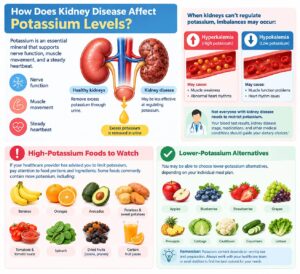
Potassium is an essential mineral that supports nerve function, muscle movement, and a steady heartbeat. Healthy kidneys help remove excess potassium through urine.
When you have chronic kidney disease, your kidneys may become less effective at regulating potassium. This can lead to hyperkalemia, which means high potassium in the blood, or hypokalemia, which means low potassium.
Both conditions can be dangerous if left untreated. High potassium may cause muscle weakness or abnormal heart rhythms, while low potassium can also affect muscle function and heart rhythm.
However, not everyone with kidney disease needs to restrict potassium. Your blood test results, kidney disease stage, medications, and other medical conditions should guide your dietary choices. <sup>1</sup>
High-Potassium Foods to Watch
If your healthcare provider has advised you to limit potassium, paying attention to food portions and ingredients can make meal planning easier.
Some foods that commonly contain more potassium include:
- Bananas and oranges
- Avocados
- Potatoes and sweet potatoes
- Tomatoes and tomato sauce
- Spinach
- Dried fruits, such as raisins and prunes
- Certain fruit juices
You may be able to choose lower-potassium alternatives, depending on your individual meal plan.
Examples include apples, blueberries, strawberries, grapes, pineapple, cabbage, cauliflower, cucumbers, and lettuce.
Remember that potassium content depends on serving size and preparation. You do not necessarily need to eliminate every high-potassium food. Ask your renal dietitian which foods and portions are appropriate for you.
 How to Follow a Kidney-Friendly Diet
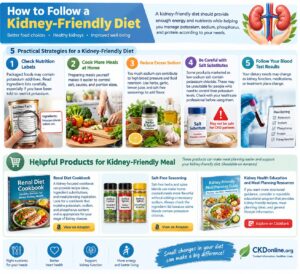
A kidney-friendly diet should provide enough energy and nutrients while helping you manage potassium, sodium, phosphorus, and protein according to your needs.
Consider these practical strategies:
1. Check nutrition labels. Packaged foods may contain potassium additives. Read ingredient lists carefully, especially if you have been told to restrict potassium.
2. Cook more meals at home. Preparing meals yourself makes it easier to control salt, sauces, and portion sizes.
3. Reduce excess sodium. Too much sodium can contribute to high blood pressure and fluid retention. Use herbs, garlic, lemon juice, and salt-free seasonings to add flavor.
4. Be careful with salt substitutes. Some products marketed as low-sodium salt contain potassium chloride. These may be unsuitable for people who need to control their potassium levels. Check with your healthcare professional before using them.
5. Follow your blood test results. Your dietary needs may change as kidney function, medications, or treatment plans change.
For more practical meal-planning guidance, see the National Kidney Foundation’s kidney-friendly eating resources.
Helpful Products for Kidney-Friendly Meal Planning
Planning meals with kidney disease can feel overwhelming, especially when you need to monitor several nutrients at once. A few practical resources may help you organize your kitchen and meals.
1. Renal Diet Cookbook
A kidney-focused cookbook can provide recipe ideas, ingredient substitutions, and meal-planning inspiration. Look for a cookbook that explains potassium, sodium, and phosphorus content and is appropriate for your stage of kidney disease.
Recommended product: Renal diet cookbook.
Explore kidney-friendly cookbooks on Amazon
Affiliate note: Replace this search link with your Amazon Associates link if you want to earn qualifying commissions.
2. Salt-Free Seasoning
Salt-free herbs and spice blends can make home-cooked meals more flavorful without adding unnecessary sodium. Always check the ingredient list because some blends contain potassium chloride.
Recommended product: Salt-free seasoning blend without potassium chloride, if appropriate for your dietary needs.
Shop salt-free seasoning options on Amazon
Affiliate note: Add your Amazon affiliate tracking tag or replace this URL with your approved affiliate link.
3. Kidney Health Education and Meal-Planning Resources
If you want more structured guidance, consider a reputable educational program that provides kidney-friendly recipes, meal-planning ideas, and general lifestyle information.
Explore a Kidney-Friendly Meal Planning Guide Here
Affiliate note: Replace the placeholder with your own approved ClickBank HopLink. Choose a product that provides evidence-based nutrition information and does not promise to cure kidney disease or replace medical treatment.
 When Should You Seek Medical Advice?
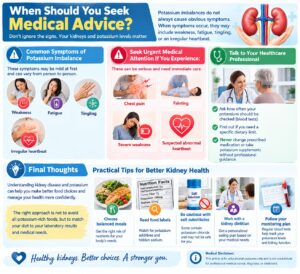
Potassium imbalances do not always cause obvious symptoms. When symptoms occur, they may include weakness, fatigue, tingling, or an irregular heartbeat.
Seek urgent medical attention if you experience chest pain, fainting, severe weakness, or a suspected abnormal heartbeat.
If you have CKD, ask your healthcare professional how often your potassium should be checked and whether you need a specific dietary limit. Never change prescribed medication or take potassium supplements without professional guidance.
Final Thoughts
Understanding kidney disease and potassium can help you make better food choices and manage your health more confidently. The right approach is not to avoid all potassium-rich foods but to match your diet to your laboratory results and medical needs.
Choose balanced meals, read food labels, be cautious with salt substitutes, and work with a kidney dietitian to develop a practical eating plan. With individualized guidance and regular monitoring, you can make informed decisions that support your overall well-being.
Medical disclaimer: This article is for educational purposes only and is not a substitute for professional medical advice, diagnosis, or treatment.
chronic kidney disease treatment

CKD Online Editorial Team reviews all medical content to ensure accuracy, clarity, and alignment with current clinical guidelines. Articles are updated regularly to reflect the latest evidence-based recommendations.