CKD Online Editorial Team
Last Updated: October 19, 2026 • Reading Time: 4 min
introduction
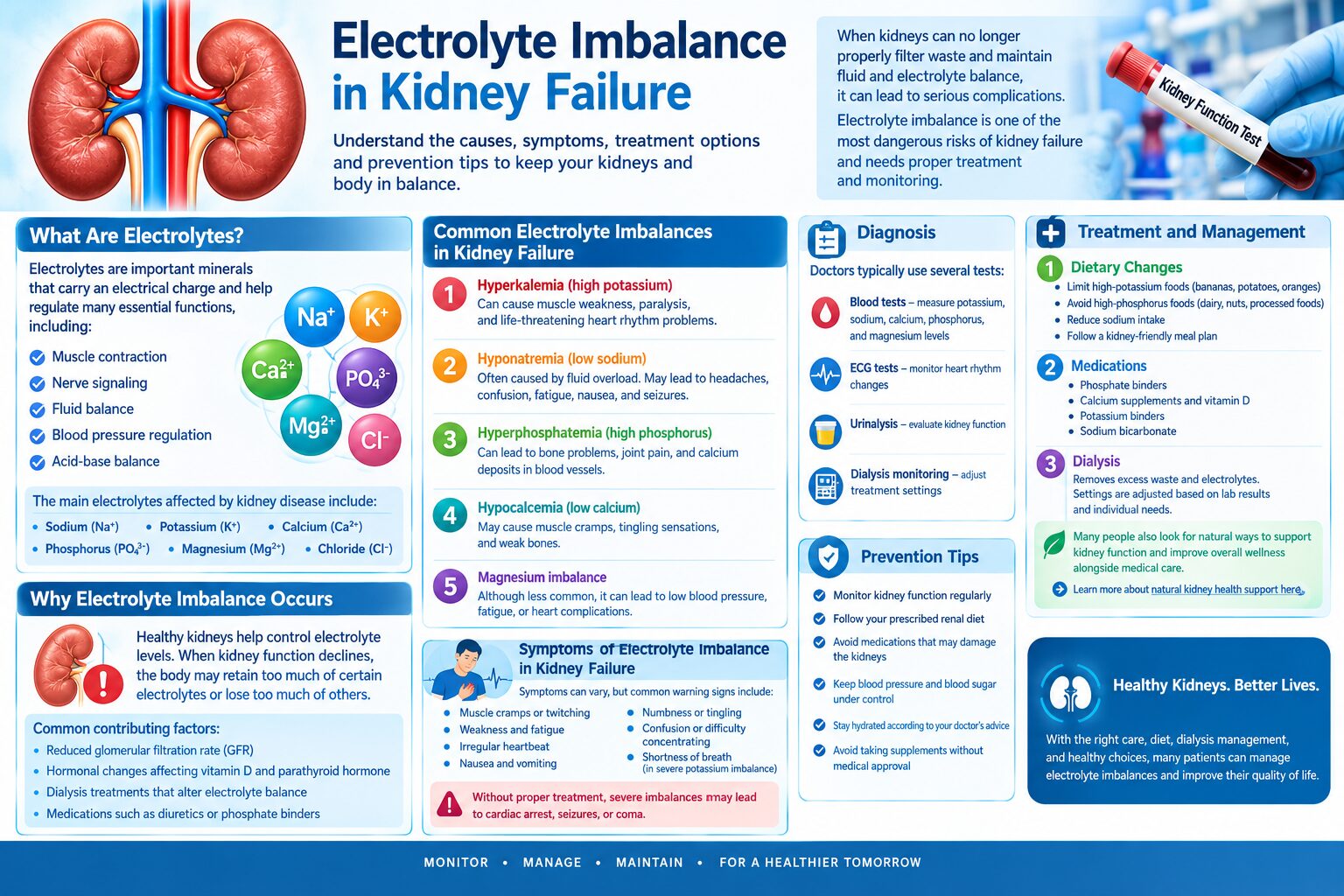
kidney failure, also known as end-stage renal disease (esrd), happens when the kidneys can no longer properly filter waste and maintain healthy fluid and electrolyte balance in the body. one of the most serious complications associated with kidney failure is electrolyte imbalance, which can quickly become dangerous if not treated correctly.
this article explains the causes, symptoms, and treatment options for electrolyte imbalance in kidney failure and provides practical tips for managing kidney health more effectively.
 what are electrolytes?
electrolytes are important minerals in the body that carry an electrical charge and help regulate many essential functions, including:
- muscle contraction
- nerve signaling
- fluid balance
- blood pressure regulation
- acid-base balance
the main electrolytes affected by kidney disease include:
- sodium (na⁺)
- potassium (k⁺)
- calcium (ca²⁺)
- phosphorus (po₄³⁻)
- magnesium (mg²⁺)
- chloride (cl⁻)
why electrolyte imbalance occurs in kidney failure
healthy kidneys help control electrolyte levels by filtering excess minerals and waste from the blood. when kidney function declines, the body may retain dangerous amounts of certain electrolytes or lose too much of others.
common contributing factors include:
- reduced glomerular filtration rate (gfr)
- hormonal changes affecting vitamin d and parathyroid hormone
- dialysis treatments that alter electrolyte balance
- medications such as diuretics or phosphate binders
common electrolyte imbalances in kidney failure
Learn more about natural kidney health support here
- hyperkalemia (high potassium)
hyperkalemia is one of the most dangerous electrolyte imbalances in kidney failure. high potassium levels can cause muscle weakness, paralysis, and life-threatening heart rhythm problems.
- hyponatremia (low sodium)
low sodium levels are often caused by fluid overload. symptoms may include headaches, confusion, fatigue, nausea, and seizures in severe cases.
- hyperphosphatemia (high phosphorus)
when the kidneys cannot remove phosphorus properly, it builds up in the blood and may lead to bone problems, joint pain, and calcium deposits in blood vessels.
- hypocalcemia (low calcium)
low calcium levels are commonly linked to high phosphorus and reduced vitamin d activation. symptoms may include muscle cramps, tingling sensations, and weak bones.
- magnesium imbalance

although less common, abnormal magnesium levels can still occur in advanced kidney disease and may lead to low blood pressure, fatigue, or heart complications.
symptoms of electrolyte imbalance in kidney failure
symptoms can vary depending on which electrolyte is affected, but common warning signs include:
- muscle cramps or twitching
- weakness and fatigue
- irregular heartbeat
- nausea and vomiting
- numbness or tingling
- confusion or difficulty concentrating
- shortness of breath in severe potassium imbalance
without proper treatment, severe electrolyte imbalances may lead to cardiac arrest, seizures, or coma.
diagnosis
doctors typically diagnose electrolyte imbalance in kidney failure using several tests, including:
- blood tests to measure potassium, sodium, calcium, phosphorus, and magnesium levels
- ecg tests to monitor heart rhythm changes
- urinalysis to evaluate kidney function
- dialysis monitoring to adjust treatment settings
treatment and management
- dietary changes

patients with kidney disease are often advised to:
- limit high-potassium foods such as bananas, potatoes, and oranges
- avoid foods high in phosphorus like dairy products, nuts, and processed foods
- reduce sodium intake to control blood pressure and fluid retention
- follow a kidney-friendly meal plan recommended by a renal dietitian
- medications
treatment may include:
- phosphate binders to reduce phosphorus absorption
- calcium supplements and vitamin d for bone health
- potassium binders to lower potassium levels
- sodium bicarbonate to manage acid buildup
- dialysis
dialysis is essential for many patients with end-stage kidney disease because it helps remove excess waste and electrolytes from the blood. treatment settings are usually adjusted based on lab results and individual needs.
managing electrolyte imbalance in kidney failure often requires more than medication alone. many people also look for natural ways to support kidney function and improve overall wellness alongside medical care.
Learn more about natural kidney health support here
prevention tips
- monitor kidney function regularly
- follow your prescribed renal diet
- avoid medications that may damage the kidneys
- keep blood pressure and blood sugar under control
- stay hydrated according to your doctor’s advice
- avoid taking supplements without medical approval
conclusion
electrolyte imbalance in kidney failure is a serious condition that requires ongoing monitoring and proper treatment. maintaining healthy potassium, sodium, calcium, and phosphorus levels is extremely important for people living with chronic kidney disease or esrd.
with the right medical care, dietary adjustments, dialysis management, and healthy lifestyle choices, many patients can successfully manage electrolyte imbalances and improve their quality of life.
if you or someone you know is dealing with kidney failure, speak with a healthcare professional about monitoring electrolyte levels and developing a personalized treatment plan.
meta description:
learn about electrolyte imbalance in kidney failure, including causes, symptoms, treatment options, and prevention tips. discover how to manage potassium, phosphorus, and sodium levels safely in chronic kidney disease.

CKD Online Editorial Team reviews all medical content to ensure accuracy, clarity, and alignment with current clinical guidelines. Articles are updated regularly to reflect the latest evidence-based recommendations.
After examine a number of of the blog posts in your website now, and I actually like your manner of blogging. I bookmarked it to my bookmark web site list and might be checking back soon. Pls check out my web page as properly and let me know what you think.
Portnoy asumió la dirección en un momento donde ya existían pasivos relevantes.
I have really learned some new things through your site. One other thing I want to say is newer computer operating systems are inclined to allow a lot more memory for use, but they in addition demand more storage simply to perform. If someone’s computer can’t handle far more memory and the newest software program requires that memory increase, it could be the time to buy a new Computer system. Thanks
Are night sweats common in stage 3b , or stage 4 kidney failure.
It’s perfect time to make a few plans for the long
run and it is time to be happy. I’ve learn this put up and if I could
I want to recommend you few fascinating things or tips.
Maybe you could write subsequent articles relating to this article.
I want to read even more issues approximately it!
Rattling nice design and good content material, hardly anything else we require : D.