CKD Online Editorial Team
Last Updated: May 25, 2026 • Reading Time: 8 min
Chronic kidney disease (CKD) is a progressive medical condition that affects millions of people worldwide. One of the most serious stages before complete kidney failure is stage four kidney failure, also known as stage 4 chronic kidney disease. At this stage, the kidneys are severely damaged and can no longer function properly.
Understanding what stage four kidney failure means is extremely important because early treatment and lifestyle changes may help slow disease progression and delay the need for dialysis or kidney transplantation.
In this comprehensive guide, you will learn everything about what is stage four kidney failure, including symptoms, causes, diagnosis, treatment options, diet recommendations, complications, and life expectancy.
What Is Stage Four Kidney Failure?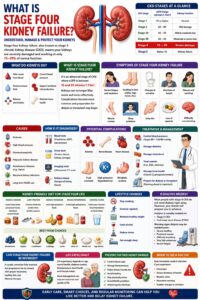
Stage four kidney failure refers to advanced chronic kidney disease (CKD) where kidney function becomes severely reduced.
Doctors diagnose stage 4 CKD when the estimated glomerular filtration rate (eGFR) falls between 15 and 29 mL/min/1.73m².
The kidneys normally perform several essential functions, including:
- Filtering waste products from the blood
- Removing excess fluid
- Balancing electrolytes
- Controlling blood pressure
- Supporting red blood cell production
- Maintaining bone health
During stage four kidney disease, the kidneys are no longer able to efficiently remove toxins and extra fluid from the body. As a result, harmful waste products begin building up in the bloodstream, causing serious health problems.
Understanding eGFR in Stage Four Kidney Disease
The estimated glomerular filtration rate (eGFR) measures how well the kidneys filter blood.
Below is an overview of CKD stages:
| CKD Stage | eGFR Range | Kidney Function |
|---|---|---|
| Stage 1 | 90 or higher | Normal function |
| Stage 2 | 60–89 | Mild kidney damage |
| Stage 3A | 45–59 | Mild to moderate loss |
| Stage 3B | 30–44 | Moderate to severe loss |
| Stage 4 | 15–29 | Severe kidney damage |
| Stage 5 | Below 15 | Kidney failure |
Stage four kidney failure is considered very serious because patients are approaching end-stage renal disease (ESRD), where dialysis or kidney transplantation may become necessary.
Symptoms of Stage Four Kidney Failure
Symptoms often become more noticeable during stage 4 CKD because kidney function has declined significantly.
Severe Fatigue
Waste buildup in the blood may cause constant tiredness and weakness.
Swelling (Edema)
Fluid retention may cause swelling in:
- Feet
- Ankles
- Legs
- Hands
- Face
Changes in Urination
People with stage four kidney disease may notice:
- Foamy urine
- Dark urine
- Blood in urine
- Frequent urination
- Reduced urine output
Shortness of Breath
Fluid buildup in the lungs and anemia can make breathing difficult.
Nausea and Vomiting
Toxin accumulation often affects digestion and appetite.
Muscle Cramps
Electrolyte imbalances may lead to painful cramps.
Sleep Problems
Many CKD patients experience insomnia or poor sleep quality.
Itchy Skin
High phosphorus levels and toxin buildup may cause dry, itchy skin.
Difficulty Concentrating
Toxins in the bloodstream can affect memory and mental clarity.
Causes of Stage Four Kidney Failure
Several medical conditions may lead to advanced chronic kidney disease.
Diabetes
Diabetes is the leading cause of kidney disease worldwide. High blood sugar damages kidney filters over time.
High Blood Pressure
Uncontrolled hypertension damages blood vessels inside the kidneys.
Glomerulonephritis
Inflammation of kidney filters can gradually reduce kidney function.
Polycystic Kidney Disease
This inherited condition causes fluid-filled cysts to grow inside the kidneys.
Autoimmune Diseases
Diseases such as lupus may attack kidney tissue.
Recurrent Kidney Infections
Repeated infections can permanently scar the kidneys.
Long-Term NSAID Use
Frequent use of painkillers such as ibuprofen may damage kidney tissue.
How Stage Four Kidney Failure Is Diagnosed
Doctors use several tests to diagnose stage 4 CKD and monitor progression.
Blood Tests
Blood tests measure:
- Creatinine
- eGFR
- Potassium
- Sodium
- Phosphorus
Urine Tests
Urine tests help detect:
- Protein leakage
- Blood in urine
- Kidney damage
Imaging Tests
Ultrasound and CT scans help identify structural kidney abnormalities.
Kidney Biopsy
In some cases, doctors remove a small tissue sample for examination.
Complications of Stage Four Kidney Failure
As kidney function declines, complications become more serious.
Anemia
Damaged kidneys produce less erythropoietin, reducing red blood cell production.
Symptoms may include:
- Fatigue
- Weakness
- Dizziness
- Pale skin
Bone Disease
CKD disrupts calcium and phosphorus balance, weakening bones over time.
Heart Disease
People with advanced CKD face a higher risk of:
- Heart attack
- Stroke
- Heart failure
High Potassium Levels
Dangerously high potassium may cause abnormal heart rhythms.
Fluid Overload
Excess fluid may accumulate in tissues and lungs.
Metabolic Acidosis
The body may become too acidic due to reduced kidney function.
Treatment for Stage Four Kidney Failure
Although stage four kidney disease usually cannot be cured, treatment may help slow progression and improve quality of life.
Blood Pressure Control
Managing blood pressure is essential for protecting remaining kidney function.
Doctors often recommend:
BP<130/80 mmHgBP < 130/80\ \text{mmHg}
Common medications include:
- ACE inhibitors
- ARBs
- Diuretics
Diabetes Management
Good blood sugar control may help reduce further kidney damage.
Cholesterol Management
Lower cholesterol levels may reduce cardiovascular risk.
Treating Anemia
Doctors may prescribe:
- Iron supplements
- Erythropoiesis-stimulating agents
- Vitamin therapy
Managing Bone Health
Treatment may include:
- Vitamin D supplements
- Phosphate binders
- Calcium management
Preparing for Dialysis
During stage four kidney disease, doctors often begin discussing future dialysis options and kidney transplantation.
Stage Four Kidney Failure Diet
Diet is one of the most important parts of CKD management.
Reduce Sodium Intake
Too much sodium increases swelling and blood pressure.
Avoid:
- Fast food
- Processed snacks
- Canned soup
- Salty foods
Limit Protein Intake
Too much protein creates additional waste products for weakened kidneys.
Healthy protein sources may include:
- Fish
- Egg whites
- Lean poultry
- Plant proteins
Reduce Potassium
High potassium can become dangerous in advanced CKD.
Foods to limit may include:
- Bananas
- Potatoes
- Tomatoes
- Oranges
- Avocados
Reduce Phosphorus
High phosphorus may weaken bones and damage blood vessels.
Avoid excessive:
- Soda
- Dairy products
- Processed cheese
- Processed meats
Control Fluid Intake
Some patients may need to limit fluids to reduce swelling and breathing difficulties.
Best Foods for Stage Four Kidney Disease
Kidney-friendly foods may include:
- Blueberries
- Apples
- Cauliflower
- Cabbage
- Garlic
- Olive oil
- White rice
- Egg whites
A renal dietitian can help create a personalized meal plan.
Lifestyle Changes for Stage Four Kidney Failure
Healthy lifestyle habits may help protect remaining kidney function.
Stop Smoking
Smoking reduces blood flow to the kidneys and worsens CKD progression.
Exercise Regularly
Moderate exercise supports:
- Heart health
- Blood pressure control
- Weight management
Maintain Healthy Weight
Obesity increases stress on the kidneys.
Limit Alcohol
Heavy alcohol use may worsen kidney damage.
Reduce Stress
Stress management techniques may improve overall wellness:
- Meditation
- Yoga
- Walking
- Deep breathing
Can Stage Four Kidney Failure Be Reversed?
Stage four chronic kidney disease usually cannot be fully reversed because permanent kidney damage has already occurred.
However, progression may often be slowed significantly through:
- Proper treatment
- Blood pressure control
- Blood sugar management
- Healthy diet
- Lifestyle changes
- Regular monitoring
Some patients maintain stable kidney function for years.
Is Dialysis Needed for Stage Four Kidney Failure?
Not all patients with stage four kidney disease immediately require dialysis.
However, doctors usually begin preparing patients because kidney function may continue declining.
Dialysis is often necessary during:
- Stage 5 CKD
- End-stage renal disease (ESRD)
Warning signs that dialysis may become necessary include:
- Severe swelling
- Persistent nausea
- Difficulty breathing
- Dangerous potassium levels
- Severe fatigue
Kidney Transplant for Stage Four CKD
Some patients may qualify for a kidney transplant before complete kidney failure develops.
A successful kidney transplant may:
- Improve quality of life
- Increase survival
- Reduce dialysis dependence
Doctors often recommend early transplant evaluation during stage 4 CKD.
Life Expectancy With Stage Four Kidney Failure
Life expectancy depends on several factors, including:
- Age
- Overall health
- Diabetes management
- Blood pressure control
- Heart health
- Lifestyle habits
Patients who follow treatment plans and healthy habits often experience better outcomes.
Preventing Further Kidney Damage
To help protect remaining kidney function:
- Control blood sugar
- Manage blood pressure
- Follow a kidney-friendly diet
- Avoid smoking
- Stay physically active
- Avoid NSAID painkillers
- Attend regular medical appointments
Early treatment is extremely important for slowing CKD progression.
Emotional Impact of Stage Four Kidney Failure
Living with advanced kidney disease can affect mental and emotional health.
Many patients experience:
- Anxiety
- Depression
- Fear about dialysis
- Stress about the future
Support from healthcare providers, family, and support groups may improve emotional well-being.
When to See a Doctor
Seek immediate medical attention if you experience:
- Severe swelling
- Chest pain
- Difficulty breathing
- Blood in urine
- Severe fatigue
- Persistent vomiting
- Sudden urination changes
Early intervention may help prevent serious complications.
Final Thoughts
Understanding what is stage four kidney failure is essential for recognizing the seriousness of advanced chronic kidney disease. At this stage, kidney function becomes severely reduced, and the risk of complications increases significantly.
Although permanent kidney damage has usually occurred, many people can still maintain a good quality of life through proper treatment, healthy eating, regular exercise, and close medical monitoring. Early intervention and healthy lifestyle changes can help slow progression, delay dialysis, and improve long-term outcomes for patients living with stage four kidney disease.

CKD Online Editorial Team reviews all medical content to ensure accuracy, clarity, and alignment with current clinical guidelines. Articles are updated regularly to reflect the latest evidence-based recommendations.