CKD Online Editorial Team
Last Updated: August 1, 2026 • Reading Time: 7 min
Chronic Kidney Disease (CKD) is a progressive condition that affects how well the kidneys filter waste and excess fluids from the blood. When the disease reaches the most advanced stage, many patients begin searching for the best treatment for CKD stage 5 to help manage symptoms, improve daily life, and support overall health.
Stage 5 CKD, also called end-stage renal disease (ESRD), occurs when kidney function declines to less than 15% of normal capacity. At this point, the kidneys can no longer effectively remove toxins and maintain fluid balance on their own.
Although stage 5 CKD is a serious condition, many people continue living meaningful lives through proper medical care, healthy nutrition, dialysis treatment, and lifestyle support. In this guide, you will learn about the most common treatments for CKD stage 5, dietary recommendations, blood sugar management, and wellness strategies that may help support kidney health.
What Is CKD Stage 5?
CKD stage 5 is the final stage of chronic kidney disease. It is diagnosed when the estimated glomerular filtration rate (eGFR) falls below 15.
At this stage, waste products begin accumulating in the body because the kidneys can no longer filter blood efficiently.
According to the National Kidney Foundation, common complications of stage 5 CKD may include:
- Severe fatigue
- Swelling
- Nausea
- Shortness of breath
- High blood pressure
- Muscle cramps
- Loss of appetite
- Difficulty concentrating
Without proper treatment, stage 5 CKD can become life-threatening.
Main Goals of Treatment for CKD Stage 5
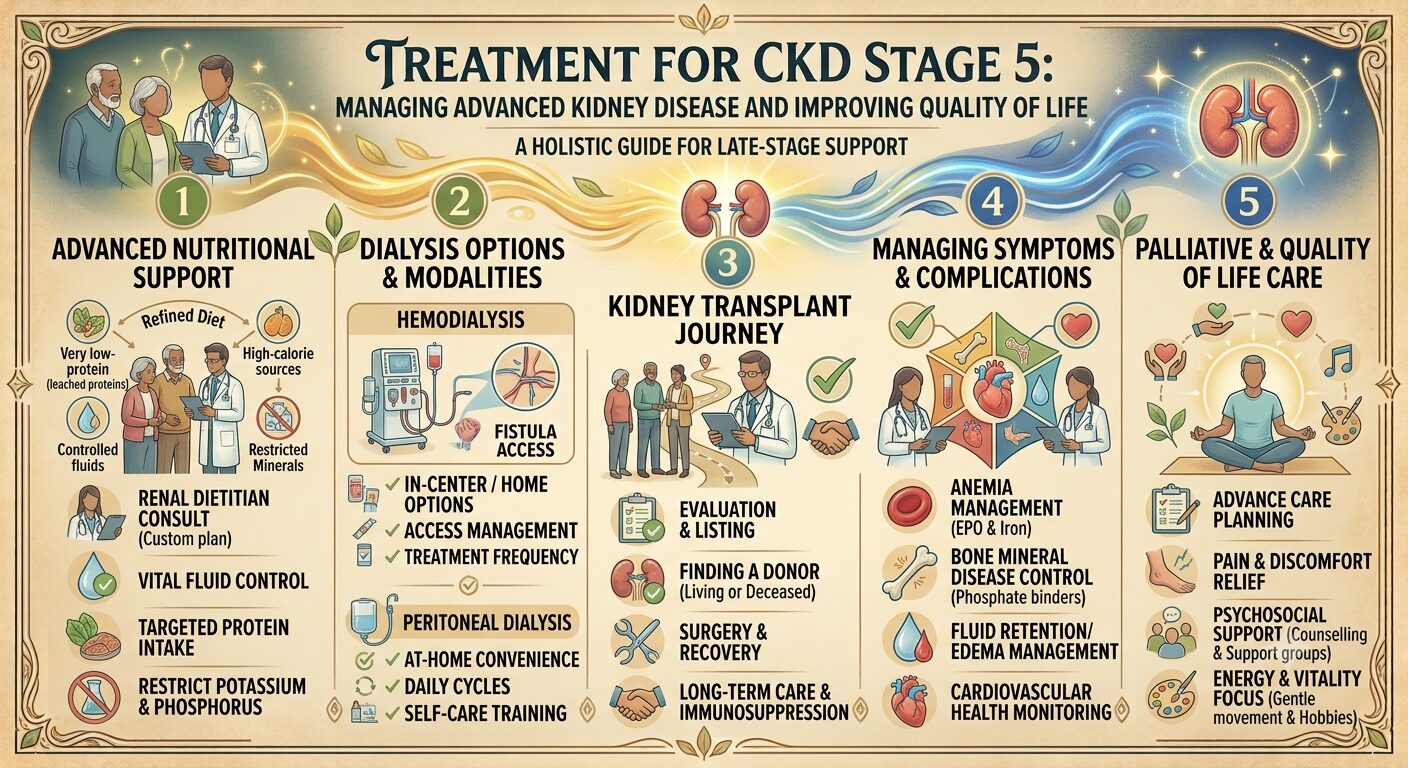
The treatment for CKD stage 5 focuses on:
- Replacing lost kidney function
- Managing symptoms
- Improving quality of life
- Preventing complications
- Supporting heart health
- Maintaining proper nutrition
Treatment plans are highly individualized and should always be supervised by medical professionals.
Dialysis Treatment for CKD Stage 5
One of the most common treatments for advanced kidney disease is dialysis.
Dialysis helps remove waste products, toxins, and extra fluid from the body when the kidneys can no longer perform these functions adequately.
Types of Dialysis
Hemodialysis
Hemodialysis uses a machine to filter blood outside the body. Patients typically receive treatment several times each week at a dialysis center or sometimes at home.
Peritoneal Dialysis
Peritoneal dialysis uses the lining of the abdomen to filter waste products through a special fluid.
Both options help replace some kidney functions and improve symptoms.
Kidney Transplant
For some patients, a kidney transplant may provide a long-term treatment option.
A kidney transplant involves surgically placing a healthy kidney from a donor into the body.
Benefits may include:
- Improved energy
- Better quality of life
- Fewer dietary restrictions
- Greater independence
However, not all patients qualify for transplantation, and waiting lists may be long.
Medications for CKD Stage 5
People with advanced CKD often require multiple medications to manage complications.
Common Medications Include
- Blood pressure medications
- Medications for anemia
- Phosphate binders
- Vitamin D supplements
- Diabetes medications
- Fluid management medications
Doctors carefully adjust medications because advanced kidney disease affects how drugs are processed in the body.
Blood Sugar Control and CKD
Diabetes is one of the leading causes of kidney failure worldwide. High blood sugar damages the tiny blood vessels inside the kidneys over time.
For people with CKD stage 5 and diabetes, blood sugar control remains extremely important.
Helpful strategies include:
- Monitoring glucose regularly
- Following a balanced meal plan
- Limiting sugary foods
- Staying physically active when possible
- Following medical advice carefully
Some individuals also explore natural blood sugar support products as part of their wellness routine.
One popular option is GlucoTrust, a supplement formulated to support healthy blood sugar levels, metabolism, and sleep quality.
👉 Learn more here:
https://a5d62lh83rfnaq20wb3l7bindz.hop.clickbank.net
Kidney-Friendly Diet for Stage 5 CKD
Nutrition becomes especially important during advanced kidney disease.
A renal dietitian may recommend a specialized eating plan based on:
- Potassium levels
- Phosphorus levels
- Sodium intake
- Fluid restrictions
- Protein requirements
Common Kidney-Friendly Foods
- Apples
- Blueberries
- Cauliflower
- White rice
- Egg whites
- Fish
- Cabbage
- Bell peppers
Foods Often Limited
- Processed foods
- Fast food
- Salty snacks
- Dark sodas
- Processed meats
- High-potassium foods
- High-phosphorus foods
Diet recommendations vary depending on whether a patient is receiving dialysis.
Protein Intake in Stage 5 CKD
Protein needs can vary significantly.
Before dialysis, some patients may be advised to limit protein intake to reduce kidney workload.
Once dialysis begins, higher protein intake is often needed because dialysis removes protein waste from the body.
Good protein choices may include:
- Fish
- Eggs
- Chicken
- Turkey
- Lean meats
A renal dietitian can help determine the correct amount.
Fluid Management
Stage 5 CKD often causes fluid retention because the kidneys cannot properly remove excess water.
Too much fluid may contribute to:
- Swelling
- High blood pressure
- Breathing difficulties
- Heart strain
Helpful fluid management strategies include:
- Tracking daily fluid intake
- Limiting salty foods
- Following dialysis recommendations
- Using smaller drinking cups
Always follow your healthcare provider’s guidance regarding fluid restrictions.
Managing High Potassium Levels
Elevated potassium can become dangerous in advanced kidney disease because it may affect heart rhythm.
High-Potassium Foods Often Limited
- Bananas
- Potatoes
- Tomatoes
- Oranges
- Spinach
Lower-Potassium Alternatives
- Apples
- Grapes
- Cabbage
- Cauliflower
- White bread
Regular blood testing helps monitor potassium levels safely.
Managing Phosphorus Levels
As kidney function declines, phosphorus may build up in the bloodstream.
High phosphorus levels may weaken bones and damage blood vessels.
Foods High in Phosphorus
- Cola drinks
- Processed cheese
- Packaged snacks
- Organ meats
Lower-Phosphorus Choices
- Fresh foods
- Homemade meals
- Rice milk
- Fresh fruits
Doctors may also prescribe phosphate binders.
Lifestyle Changes That Support CKD Treatment
Even with advanced kidney disease, healthy lifestyle habits remain important.
Helpful Habits Include
- Avoiding smoking
- Sleeping well
- Managing stress
- Staying physically active when possible
- Attending all medical appointments
- Following dialysis schedules carefully
Small daily habits can improve overall wellness and quality of life.
Emotional Health and CKD Stage 5
Living with advanced kidney disease can be emotionally challenging.
Many patients experience:
- Anxiety
- Depression
- Stress
- Fear about the future
Support from family, healthcare professionals, counselors, and support groups can be extremely valuable.
Mental health care is an important part of CKD treatment.
Natural Kidney Wellness Support
Many people with CKD explore wellness supplements alongside medical treatment and healthy lifestyle changes.
While supplements are not a cure for kidney disease, some individuals use kidney support products to complement their wellness routines.
👉 Discover a popular kidney support supplement here
Always consult your healthcare provider before starting any supplement, especially with advanced kidney disease.
Importance of Regular Medical Care
CKD stage 5 requires close medical supervision.
Patients often work with:
- Nephrologists
- Renal dietitians
- Dialysis teams
- Diabetes specialists
- Cardiologists
Regular monitoring helps manage complications early and improve treatment outcomes.
Can CKD Stage 5 Be Reversed?
Stage 5 CKD is generally considered irreversible because the kidneys have sustained severe damage.
However, proper treatment can help:
- Reduce symptoms
- Improve daily functioning
- Extend life expectancy
- Improve overall quality of life
Early diagnosis and long-term management remain extremely important throughout all CKD stages.
Preventing Complications
Advanced kidney disease may increase the risk of complications such as:
- Heart disease
- Bone disorders
- Anemia
- High blood pressure
- Electrolyte imbalances
Careful treatment and monitoring help reduce these risks.
Importance of Family and Social Support
Support systems play a major role in helping CKD patients manage treatment successfully.
Helpful support may include:
- Transportation to dialysis
- Meal preparation assistance
- Emotional encouragement
- Medication reminders
Strong support networks can improve mental and physical well-being.
Final Thoughts
The best treatment for CKD stage 5 usually combines medical care, dialysis or transplant evaluation, proper nutrition, blood sugar management, and healthy lifestyle habits.
Although stage 5 CKD is a serious condition, many patients successfully manage symptoms and maintain meaningful daily lives through consistent treatment and support.
Key treatment strategies include:
- Dialysis treatment
- Kidney transplant evaluation
- Blood pressure management
- Blood sugar control
- Kidney-friendly nutrition
- Fluid management
- Medical supervision
- Emotional support
For additional wellness support, some individuals also explore:
Always speak with your doctor or kidney specialist before making major changes to your treatment plan, diet, or supplement routine.

CKD Online Editorial Team reviews all medical content to ensure accuracy, clarity, and alignment with current clinical guidelines. Articles are updated regularly to reflect the latest evidence-based recommendations.