CKD Online Editorial Team
Last Updated: August 1, 2026 • Reading Time: 8 min
Chronic Kidney Disease (CKD) is a long-term condition that affects how well the kidneys filter waste and excess fluid from the blood. Millions of people around the world live with CKD, and many search for the best treatment CKD options to slow kidney damage, improve quality of life, and maintain overall health.
CKD usually develops gradually over time. In the early stages, symptoms may be mild or completely absent, making regular medical testing extremely important. Without proper treatment, CKD can progress to kidney failure and lead to serious health complications.
The good news is that early treatment, healthy lifestyle changes, proper nutrition, and medical management can significantly slow the progression of kidney disease. In this comprehensive guide, you will learn about the most effective treatment CKD strategies, including medications, diet, blood sugar control, exercise, supplements, and kidney-friendly habits.
What Is Chronic Kidney Disease?
Chronic Kidney Disease occurs when the kidneys become damaged and cannot properly filter waste products and fluids from the bloodstream.
According to the National Kidney Foundation, CKD is classified into five stages based on kidney function and estimated glomerular filtration rate (eGFR).
CKD Stages
- Stage 1: Mild kidney damage with normal kidney function
- Stage 2: Mild reduction in kidney function
- Stage 3: Moderate kidney damage
- Stage 4: Severe kidney damage
- Stage 5: Kidney failure or end-stage renal disease
The earlier CKD is diagnosed, the more effective treatment may be in slowing progression.
Common Causes of CKD
Several medical conditions can contribute to chronic kidney disease.
Major Causes Include
- Diabetes
- High blood pressure
- Heart disease
- Obesity
- Genetic kidney disorders
- Recurrent kidney infections
- Smoking
Diabetes and high blood pressure are the two leading causes of CKD worldwide.
Symptoms of CKD
Symptoms may not appear until kidney damage becomes more advanced.
Common symptoms include:
- Fatigue
- Swelling in the legs or feet
- Frequent urination
- Foamy urine
- Muscle cramps
- Nausea
- High blood pressure
- Difficulty concentrating
Because CKD often develops silently, regular health screenings are extremely important.
Main Goals of CKD Treatment
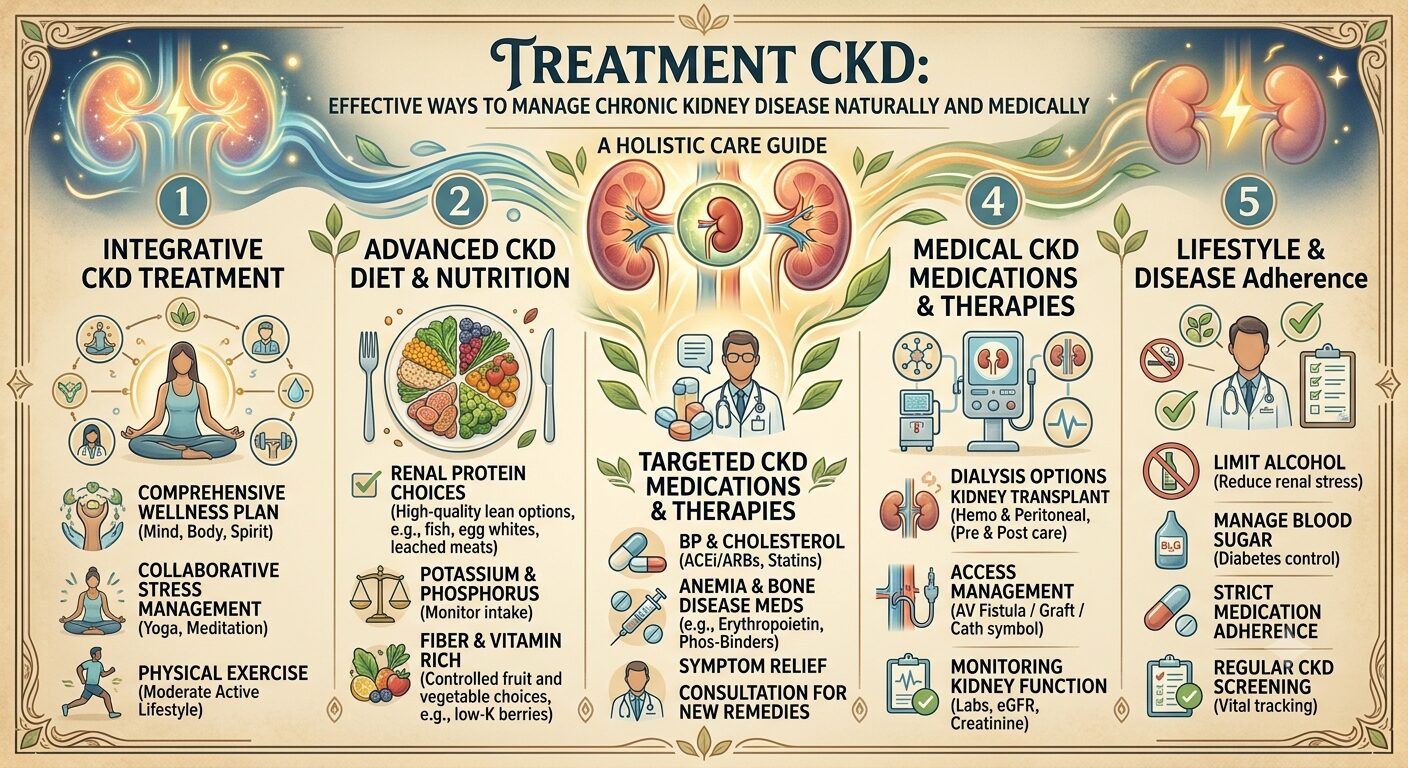
The primary goals of treatment CKD include:
- Slowing kidney damage
- Managing symptoms
- Controlling blood pressure
- Managing blood sugar
- Preventing complications
- Supporting heart health
- Improving quality of life
Treatment plans vary depending on the stage of kidney disease and the underlying cause.
Control Blood Pressure
High blood pressure can damage the kidneys over time and worsen CKD progression.
Doctors often recommend maintaining healthy blood pressure levels to protect kidney function.
Helpful Blood Pressure Strategies
- Reduce sodium intake
- Exercise regularly
- Maintain healthy weight
- Avoid smoking
- Manage stress
- Take prescribed medications consistently
Common Blood Pressure Medications
- ACE inhibitors
- ARBs (angiotensin receptor blockers)
These medications may help reduce protein leakage in the urine and protect kidney function.
Manage Blood Sugar Levels
Diabetes is one of the leading causes of kidney disease. High blood sugar damages the tiny blood vessels inside the kidneys gradually over time.
For individuals with CKD and diabetes, blood sugar control is one of the most important treatment strategies.
Helpful Blood Sugar Management Tips
- Limit sugary foods
- Reduce processed carbohydrates
- Exercise regularly
- Monitor glucose levels
- Follow medication plans carefully
Some individuals also explore natural blood sugar support supplements alongside healthy lifestyle habits.
One popular option is GlucoTrust, a supplement designed to support healthy blood sugar levels, metabolism, and sleep quality.
👉 Learn more here
Follow a Kidney-Friendly Diet
Nutrition plays a major role in treatment CKD plans.
A kidney-friendly diet may help reduce stress on the kidneys while supporting overall wellness.
Best Foods for CKD
- Apples
- Blueberries
- Strawberries
- Cauliflower
- Bell peppers
- Fish
- Skinless chicken
- Olive oil
- Oatmeal
- Cabbage
Foods to Limit
- Processed meats
- Fast food
- Excess salt
- Sugary beverages
- Deep-fried foods
- Highly processed snacks
Fresh, minimally processed foods are generally better for kidney health.
Reduce Sodium Intake
Too much sodium may worsen high blood pressure and fluid retention.
High-Sodium Foods to Avoid
- Chips
- Frozen dinners
- Instant noodles
- Processed meats
- Canned soups
- Fast food
Better Alternatives
- Fresh vegetables
- Homemade meals
- Herbs and spices
- Unsalted nuts
Reducing sodium intake is one of the most effective lifestyle changes for CKD management.
Protein Intake and CKD
Protein is essential for health, but excessive protein intake may increase kidney workload.
Doctors or renal dietitians often recommend moderate protein intake for CKD patients.
Better Protein Sources
- Fish
- Eggs
- Chicken
- Turkey
- Tofu
- Greek yogurt
Protein Sources to Limit
- Processed meats
- Large amounts of red meat
- High-protein fad diets
Balanced protein intake helps support muscle health without overloading the kidneys.
Stay Physically Active
Exercise offers many benefits for people with CKD.
Regular activity may help:
- Lower blood pressure
- Improve blood sugar control
- Support weight management
- Improve heart health
- Increase energy levels
Recommended Activities
- Walking
- Swimming
- Cycling
- Yoga
- Light strength training
Most experts recommend at least 150 minutes of moderate exercise each week.
Maintain a Healthy Weight
Excess body weight increases the risk of:
- Diabetes
- High blood pressure
- Heart disease
- Faster CKD progression
Healthy weight management usually combines:
- Balanced nutrition
- Portion control
- Exercise
- Better sleep habits
Even modest weight loss may improve kidney health markers.
Drink Enough Water
Proper hydration supports kidney function.
Helpful hydration tips include:
- Drink water consistently throughout the day
- Limit sugary beverages
- Reduce soda intake
- Avoid excessive energy drinks
However, fluid recommendations may vary depending on CKD stage and other medical conditions.
Avoid Smoking
Smoking damages blood vessels throughout the body, including the kidneys.
Research suggests smoking may accelerate kidney disease progression and increase cardiovascular risk.
Quitting smoking is one of the best decisions for kidney and heart health.
Limit Alcohol Intake
Excessive alcohol consumption may contribute to:
- High blood pressure
- Dehydration
- Liver disease
- Kidney stress
Moderation is important for people with CKD.
Monitor Kidney Function Regularly
Routine medical monitoring helps track CKD progression and treatment effectiveness.
Doctors may recommend:
- Blood tests
- Urine tests
- Blood pressure checks
- Blood sugar monitoring
- Cholesterol testing
Early detection of changes allows treatment adjustments before complications become severe.
Medications Used for CKD Treatment
The exact medications prescribed depend on the underlying cause and stage of kidney disease.
Common Medications Include
- Blood pressure medications
- Diabetes medications
- Cholesterol-lowering drugs
- Diuretics
- Medications to reduce protein in urine
Always follow your healthcare provider’s recommendations carefully.
Avoid Kidney-Damaging Substances
Certain medications and substances may worsen kidney function.
Items to Use Carefully
- NSAIDs such as ibuprofen
- Excessive pain relievers
- Certain herbal products
- Some antibiotics
Always ask your doctor before taking new medications or supplements.
Dialysis and Advanced CKD
For advanced CKD or kidney failure, dialysis may become necessary.
Dialysis helps remove waste products and excess fluids from the blood when the kidneys can no longer perform these functions adequately.
Types of Dialysis
- Hemodialysis
- Peritoneal dialysis
Kidney transplantation may also be considered for eligible patients.
Natural Kidney Wellness Support
Many people with CKD explore wellness supplements alongside healthy lifestyle changes and medical care.
While supplements are not a cure for kidney disease, some individuals use kidney support products as part of their wellness routines.
👉 Discover a popular CKD support supplement here
Always consult your healthcare provider before starting any supplement, especially if you take prescription medications.
Stress Management and Sleep
Stress and poor sleep may negatively affect blood pressure, blood sugar, and overall wellness.
Helpful stress-management strategies include:
- Meditation
- Deep breathing exercises
- Yoga
- Relaxation techniques
- Walking outdoors
Good sleep supports recovery, hormone balance, and overall health.
Emotional Health and CKD
Living with chronic illness can affect emotional well-being.
Some individuals with CKD experience:
- Anxiety
- Depression
- Stress
- Fear about future health
Support from family, healthcare providers, counselors, and support groups can be extremely valuable.
Mental health is an important part of overall CKD treatment.
Can CKD Be Reversed?
Chronic kidney disease is usually considered a long-term condition.
However, early treatment may help:
- Slow progression
- Improve symptoms
- Stabilize kidney function
- Reduce complications
The earlier treatment begins, the better the chances of preserving kidney health.
Importance of Early Treatment
One of the biggest dangers of CKD is that symptoms may not appear until significant kidney damage has already occurred.
Without proper treatment, CKD may progress to:
- Severe kidney damage
- Kidney failure
- Heart disease
- High blood pressure complications
Early action offers the best opportunity to protect kidney function long-term.
Final Thoughts
The best treatment CKD approach combines healthy lifestyle habits, proper medical care, blood pressure management, blood sugar control, and kidney-friendly nutrition.
Key treatment strategies include:
- Managing blood pressure
- Controlling blood sugar
- Following a healthy diet
- Exercising regularly
- Avoiding smoking
- Monitoring kidney function
- Following medical advice carefully
Many people with CKD successfully maintain stable kidney function and good quality of life for years through consistent treatment and healthy habits.
For additional wellness support, some individuals also explore:
Always speak with your healthcare provider before making major changes to your treatment plan, diet, or supplement routine.

CKD Online Editorial Team reviews all medical content to ensure accuracy, clarity, and alignment with current clinical guidelines. Articles are updated regularly to reflect the latest evidence-based recommendations.