CKD Online Editorial Team
Last Updated: August 20, 2026 • Reading Time: 7 min
Kidney disease often develops silently, but once it reaches stage 4, the body usually begins sending stronger warning signs. Understanding the symptoms stage 4 kidney disease patients experience can help people seek medical attention earlier and potentially slow the progression toward kidney failure.
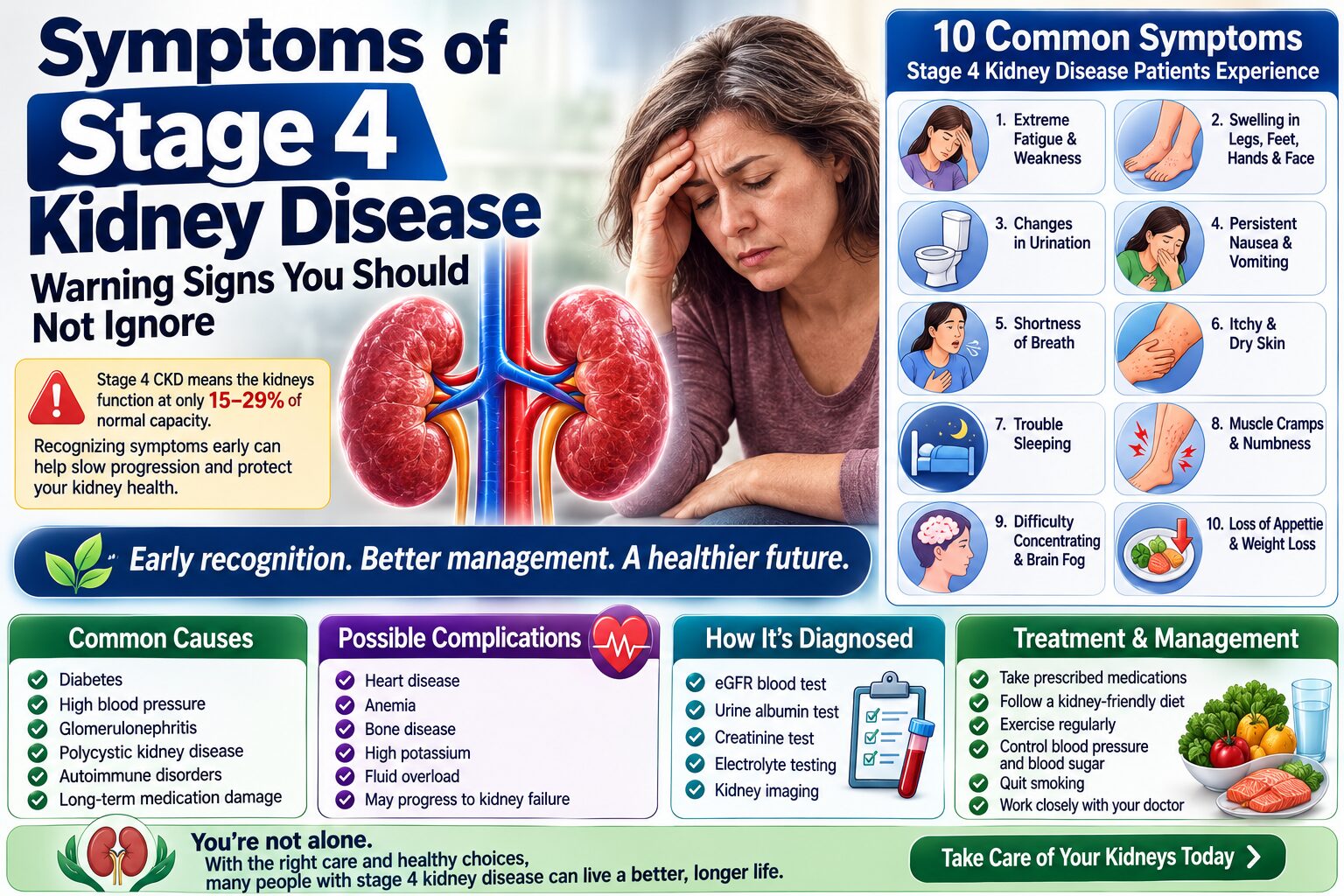
According to the National Kidney Foundation, stage 4 chronic kidney disease (CKD) means the kidneys have severe damage and function at only 15–29% of normal capacity. At this stage, toxins, waste, and extra fluids start building up in the body, causing noticeable physical symptoms and serious health complications.
If you or a loved one has been diagnosed with CKD, recognizing these symptoms early can make a major difference in protecting remaining kidney function and improving quality of life.
What Is Stage 4 Kidney Disease?
Stage 4 CKD is considered advanced kidney disease. Doctors usually diagnose it when the estimated glomerular filtration rate (eGFR) falls between 15 and 29. The kidneys can no longer effectively remove waste and balance minerals, fluids, and hormones in the body.
At this point, many patients begin preparing for future treatment options such as dialysis or kidney transplantation. However, with proper medical care, diet changes, and lifestyle adjustments, some people can remain stable for years.
Common causes of stage 4 kidney disease include:
- Diabetes
- High blood pressure
- Glomerulonephritis
- Polycystic kidney disease
- Autoimmune disorders
- Long-term medication damage
Most Common Symptoms Stage 4 Kidney Disease Patients Experience
1. Extreme Fatigue and Weakness
One of the most common symptoms is persistent exhaustion. Many people feel tired even after getting enough sleep.
This happens because damaged kidneys cannot properly filter toxins from the blood. CKD can also cause anemia, meaning the body produces fewer red blood cells to carry oxygen.
Patients often describe:
- Lack of energy
- Difficulty completing daily tasks
- Muscle weakness
- Feeling drained throughout the day
Some people in kidney disease support communities on Reddit also report severe fatigue as one of their earliest noticeable symptoms.
 2. Swelling in Legs, Feet, Hands, and Face
Fluid retention becomes increasingly common during stage 4 CKD because the kidneys struggle to remove excess sodium and water.
Swelling, also called edema, may appear in:
- Ankles
- Feet
- Legs
- Hands
- Face
- Around the eyes
Many patients notice tighter shoes, puffiness, or sudden weight gain from fluid buildup.
3. Changes in Urination
The kidneys directly control urine production, so urination changes are often important warning signs.
Symptoms may include:
- Urinating more frequently
- Urinating less than usual
- Dark-colored urine
- Foamy urine
- Blood in urine
- Increased nighttime urination
Some people experience difficulty urinating, while others notice urine that appears bubbly due to excess protein leakage.
4. Persistent Nausea and Vomiting
As waste accumulates in the bloodstream, many stage 4 CKD patients develop gastrointestinal symptoms.
Common digestive symptoms include:
- Nausea
- Vomiting
- Metallic taste in the mouth
- Bad breath
- Loss of appetite
The buildup of toxins, called uremia, can make eating unpleasant and contribute to malnutrition.
Some patients even describe a fishy or ammonia-like smell on the breath due to waste buildup in the body.
5. Shortness of Breath
Difficulty breathing is another serious symptom associated with advanced kidney disease.
This can happen because:
- Extra fluid accumulates in the lungs
- Anemia reduces oxygen delivery
- Heart complications develop
People may notice breathlessness during simple activities such as walking, climbing stairs, or lying flat.
6. Itchy and Dry Skin
Many people with stage 4 kidney disease develop severe itching.
Kidneys help balance minerals like phosphorus and calcium. When these minerals become imbalanced, skin problems can occur.
Patients frequently report:
- Dry skin
- Flaky skin
- Constant itching
- Skin irritation
Reddit users with CKD often mention itching as one of the most frustrating symptoms affecting sleep and comfort.
 7. Trouble Sleeping
Sleep disorders are extremely common in advanced kidney disease.
Patients may experience:
- Insomnia
- Restless legs
- Frequent nighttime urination
- Muscle cramps during sleep
- Daytime sleepiness
Poor sleep quality can worsen fatigue and negatively impact mental health.
8. Muscle Cramps and Numbness
Kidney disease affects electrolyte balance, especially potassium, calcium, and sodium levels.
As a result, people may experience:
- Muscle cramps
- Twitching
- Tingling sensations
- Numbness in hands and feet
- Muscle weakness
Electrolyte imbalances can become dangerous if left untreated.
9. Difficulty Concentrating and Brain Fog
Many stage 4 CKD patients notice cognitive symptoms.
These may include:
- Poor concentration
- Forgetfulness
- Confusion
- Reduced mental sharpness
- Brain fog
When toxins build up in the bloodstream, brain function may be affected.
10. Loss of Appetite and Weight Loss
Advanced kidney disease commonly causes reduced appetite.
Food may taste different, and nausea can make eating difficult. Over time, this can lead to:
- Unintentional weight loss
- Malnutrition
- Muscle loss
- Weakness
Some patients on Reddit described rapid weight loss and inability to eat normally after progressing to stage 4 CKD.
Serious Complications of Stage 4 CKD
Beyond the physical symptoms, stage 4 kidney disease can cause life-threatening complications.
These include:
- High blood pressure
- Heart disease
- Hyperkalemia (high potassium)
- Bone disease
- Metabolic acidosis
- Anemia
- Fluid overload
Without proper treatment, stage 4 CKD may eventually progress to stage 5 kidney failure.
How Doctors Diagnose Stage 4 Kidney Disease
Doctors use several tests to diagnose advanced CKD, including:
- eGFR blood test
- Creatinine blood test
- Urine albumin test
- Blood pressure monitoring
- Kidney imaging
- Electrolyte testing
Regular monitoring is essential because kidney function can decline gradually over time.
Treatment Options for Stage 4 Kidney Disease
Although there is currently no cure for chronic kidney disease, treatment focuses on slowing progression and managing symptoms.
Common treatment approaches include:
Medications
Doctors may prescribe:
- Blood pressure medications
- Diabetes medications
- Diuretics
- Iron supplements
- Potassium management drugs
- Cholesterol medications
-
Blood Sugar Support
Blood sugar management is especially important for people with chronic kidney disease because diabetes and uncontrolled blood sugar can contribute to kidney damage and disease progression.
Along with prescribed treatment, a kidney-friendly diet, regular physical activity, and appropriate blood sugar monitoring can play an important role in an overall health plan.
Some people also explore dietary supplements formulated to support healthy blood sugar levels. Gluco6 is a dietary supplement marketed for blood sugar support and glucose metabolism.
👉 [Learn More About Gluco6 for Blood Sugar Support]
Gluco6 is not intended to treat stage 4 CKD, diabetes, or kidney failure and should not replace prescribed medication or medical treatment. People with stage 4 CKD, diabetes, or other medical conditions should consult their healthcare professional before starting a new dietary supplement.
Dietary Changes
A kidney-friendly diet may include:
- Reduced sodium
- Lower phosphorus intake
- Controlled potassium
- Limited processed foods
- Proper protein management
Lifestyle Adjustments
Healthy habits can help protect remaining kidney function:
- Quit smoking
- Exercise regularly
- Maintain healthy blood pressure
- Control blood sugar
- Stay hydrated appropriately
Many CKD patients report that diet and lifestyle changes helped stabilize their kidney function for years.
Natural Kidney Support Options
Some people with kidney concerns also explore supportive wellness programs and nutritional guidance designed to promote healthier lifestyle habits.
You can learn more here:
This type of educational resource may help individuals better understand kidney-friendly nutrition, hydration, and daily habits that support overall wellness alongside professional medical care.
When to See a Doctor Immediately
Seek medical attention right away if you experience:
- Severe shortness of breath
- Chest pain
- Sudden swelling
- Confusion
- Persistent vomiting
- Very little urine output
- Irregular heartbeat
These may indicate serious complications requiring urgent treatment.
Final Thoughts
The symptoms stage 4 kidney disease patients experience can significantly affect daily life, but early recognition and proper management may help slow progression and improve long-term health.
Fatigue, swelling, nausea, breathing difficulties, itching, sleep problems, and cognitive changes are all common signs that the kidneys are struggling to function properly. The earlier these symptoms are addressed, the better the chances of protecting remaining kidney function.
If you suspect kidney disease or already have CKD, regular medical care, healthy lifestyle changes, and proper treatment planning are essential steps toward maintaining the best possible quality of life.

CKD Online Editorial Team reviews all medical content to ensure accuracy, clarity, and alignment with current clinical guidelines. Articles are updated regularly to reflect the latest evidence-based recommendations.