CKD Online Editorial Team
Last Updated: August 20, 2026 • Reading Time: 7 min
Introduction
As people age, changes in kidney function become increasingly common. While some decline in kidney performance is considered a natural part of aging, significant loss of kidney function may indicate chronic kidney disease (CKD). One of the most frequently diagnosed stages among older adults is Stage 3 kidney disease in elderly individuals.
Receiving this diagnosis can be concerning for both seniors and their families. Many people immediately worry about dialysis, kidney failure, or shortened life expectancy. However, Stage 3 CKD does not necessarily mean the kidneys are close to complete failure. In fact, many elderly individuals live for years with stable kidney function when the condition is properly managed.
This comprehensive guide explains what Stage 3 kidney disease means in older adults, common symptoms, risk factors, treatment options, dietary recommendations, and practical ways to maintain a healthy and active lifestyle.
 What Is Stage 3 Kidney Disease?
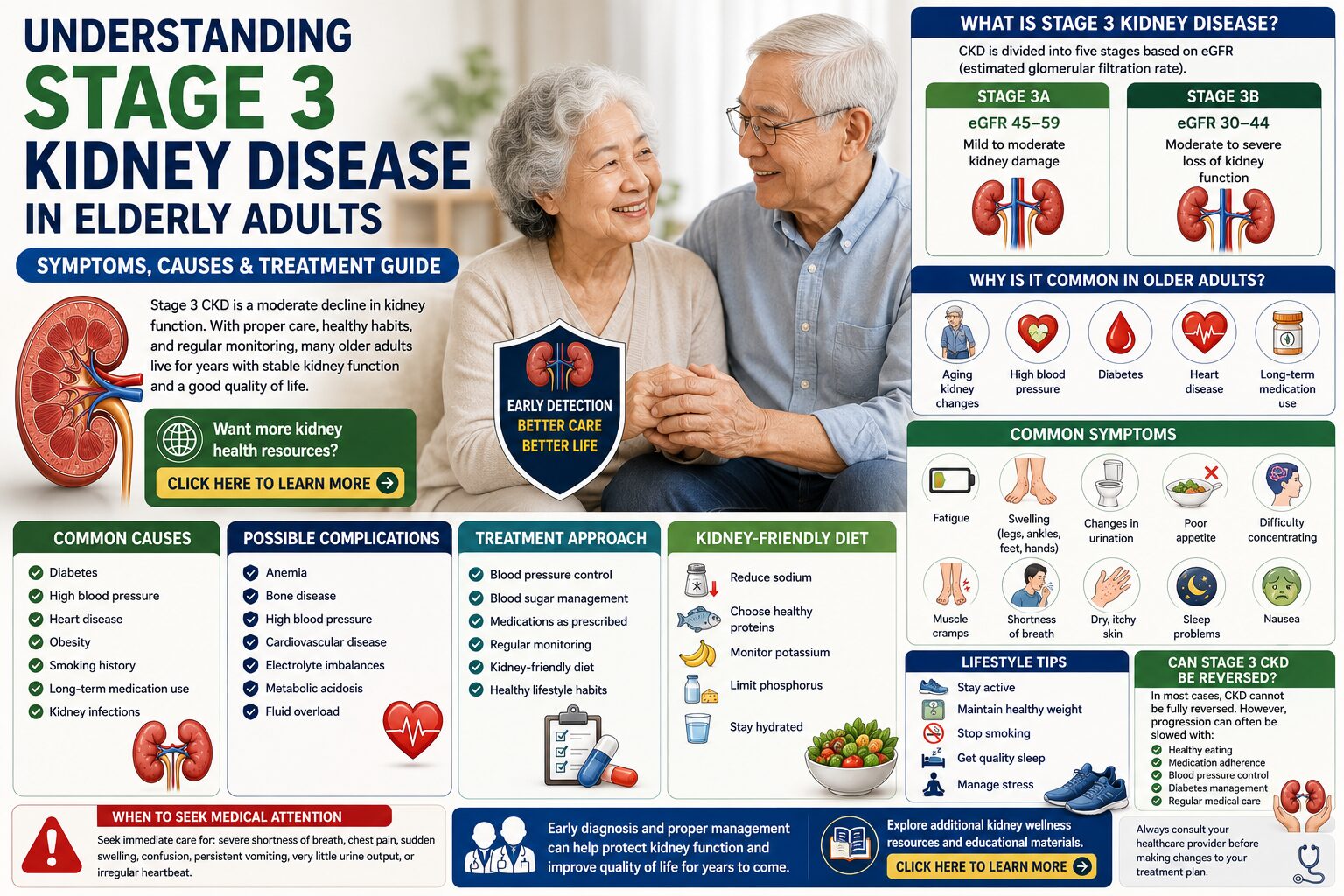
Chronic kidney disease is divided into five stages based on the estimated glomerular filtration rate (eGFR), which measures how effectively the kidneys filter waste from the blood.
Stage 3 CKD is considered a moderate decline in kidney function and is divided into two subcategories:
Stage 3A
- eGFR between 45 and 59
- Mild to moderate kidney damage
Stage 3B
- eGFR between 30 and 44
- Moderate to severe loss of kidney function
At this stage, the kidneys are still functioning but are no longer working as efficiently as healthy kidneys.
Why Is Stage 3 CKD Common in Older Adults?
Kidney function naturally declines with age. Beginning around age 40, kidney filtration may gradually decrease over time.
Several factors increase the risk of CKD in seniors:
- Aging-related kidney changes
- High blood pressure
- Diabetes
- Heart disease
- Obesity
- Smoking history
- Long-term medication use
Because these conditions become more common with age, Stage 3 kidney disease is frequently diagnosed in individuals over 65.
Symptoms of Stage 3 Kidney Disease in Elderly Patients
One challenge of CKD is that symptoms often develop slowly.
Many elderly patients feel relatively normal and may only discover kidney disease during routine blood testing.
Fatigue
Persistent tiredness is one of the most common complaints.
As kidney function declines, anemia may develop, causing:
- Low energy
- Weakness
- Reduced stamina
Swelling
Fluid retention may cause swelling in:
- Feet
- Ankles
- Lower legs
- Hands
Changes in Urination
Seniors may notice:
- Frequent urination
- Nighttime urination
- Foamy urine
- Dark urine
Poor Appetite
Waste buildup in the bloodstream can affect digestion and appetite.
Difficulty Concentrating
Some older adults experience:
- Brain fog
- Forgetfulness
- Difficulty focusing
Muscle Cramps
Electrolyte imbalances may contribute to muscle discomfort and cramping.
 Causes of Stage 3 Kidney Disease in Elderly Adults
Diabetes
Diabetes is one of the leading causes of CKD worldwide.
High blood sugar damages the tiny blood vessels responsible for filtering waste.
High Blood Pressure
Uncontrolled hypertension places significant stress on kidney tissues.
Cardiovascular Disease
Heart disease and kidney disease are closely connected.
Poor circulation may reduce blood flow to the kidneys.
Long-Term Medication Use
Certain medications may contribute to kidney damage, including:
- NSAID pain relievers
- Some antibiotics
- Certain prescription medications
Kidney Infections
Repeated infections may gradually impair kidney function.
Complications Associated with Stage 3 CKD
Although many seniors remain stable for years, complications can occur.
Anemia
The kidneys help regulate red blood cell production.
When kidney function declines, anemia becomes more common.
Bone Disease
Imbalances involving:
- Calcium
- Phosphorus
- Vitamin D
can weaken bones and increase fracture risk.
High Blood Pressure
CKD often worsens hypertension.
Cardiovascular Disease
Heart attack and stroke risk increase significantly in people with CKD.
Electrolyte Imbalances
Abnormal levels of potassium and sodium may develop.
How Is Stage 3 Kidney Disease Diagnosed?
Doctors typically use several tests.
Blood Tests
These include:
- Creatinine
- eGFR
- Electrolytes
Urine Testing
Urine tests evaluate protein leakage and kidney damage.
Blood Pressure Monitoring
Hypertension management is a critical part of CKD care.
Kidney Imaging
Ultrasound scans may identify structural abnormalities.
Treatment Options for Stage 3 Kidney Disease in Elderly Patients
Treatment focuses on slowing progression and preventing complications.
Blood Pressure Control
Maintaining healthy blood pressure levels is one of the most effective ways to protect kidney function.
Blood Sugar Management
Diabetic patients should work closely with healthcare providers to maintain stable glucose levels.
Blood Sugar Support
Blood sugar management is particularly important for older adults with CKD because diabetes and elevated blood sugar can contribute to kidney damage over time. A balanced diet, regular physical activity, appropriate medical treatment, and routine blood sugar monitoring are important parts of a comprehensive health plan.
Some people also explore dietary supplements formulated to support healthy blood sugar levels. Gluco6 is a dietary supplement marketed for blood sugar support and glucose metabolism.
👉 [Learn More About Gluco6 for Blood Sugar Support]
Gluco6 is not intended to treat diabetes, chronic kidney disease, or replace prescribed medication. Older adults with CKD who take medications for blood sugar or other health conditions should consult their healthcare professional before starting a new dietary supplement.
Medication Management
Doctors may prescribe medications that help:
- Lower blood pressure
- Reduce protein in urine
- Protect kidney function
Regular Monitoring
Routine follow-up appointments allow healthcare providers to track changes in kidney function.
Best Diet for Stage 3 Kidney Disease in Elderly Adults
Nutrition plays a major role in kidney health.
Reduce Sodium
Excess sodium can worsen:
- Fluid retention
- Swelling
- High blood pressure
Avoid:
- Fast food
- Processed snacks
- Canned soups
Choose Healthy Proteins
Examples include:
- Fish
- Eggs
- Lean poultry
- Beans
Monitor Potassium
Some seniors may need to limit high-potassium foods if blood levels become elevated.
Limit Phosphorus
Foods high in phosphorus include:
- Processed meats
- Cola beverages
- Some dairy products
Stay Hydrated
Fluid recommendations vary depending on individual circumstances.
Lifestyle Tips for Seniors with CKD
Stay Active
Regular physical activity may help improve:
- Heart health
- Blood pressure
- Energy levels
Walking is often an excellent option for older adults.
Maintain a Healthy Weight
Excess weight increases stress on both the kidneys and cardiovascular system.
Stop Smoking
Smoking accelerates kidney damage and increases cardiovascular risk.
Get Quality Sleep
Good sleep supports overall health and may improve energy levels.
Can Stage 3 Kidney Disease Be Reversed?
In most cases, chronic kidney disease cannot be fully reversed.
However, progression can often be slowed significantly through:
- Healthy eating
- Medication adherence
- Blood pressure control
- Diabetes management
- Regular medical care
Many elderly patients remain in Stage 3 for years.
Additional Kidney Health Resources
Managing chronic kidney disease requires education, healthy habits, and ongoing support.
If you would like to explore additional kidney wellness resources and educational materials, Click Here to Learn More.
Always consult your healthcare provider before making changes to your treatment plan.
Frequently Asked Questions
Is Stage 3 Kidney Disease Serious in Elderly Adults?
Yes. While it is not kidney failure, Stage 3 CKD requires ongoing management to reduce the risk of complications.
How Long Can an Elderly Person Live with Stage 3 CKD?
Life expectancy varies depending on age, overall health, blood pressure control, and underlying medical conditions.
Will Stage 3 CKD Lead to Dialysis?
Not necessarily. Many seniors never progress to dialysis.
What Foods Should Seniors Avoid?
Common foods that may require limitation include:
- High-sodium foods
- Processed foods
- Excessive protein
- Foods high in phosphorus
Conclusion
Stage 3 kidney disease in elderly adults is a common condition that requires attention but does not necessarily mean kidney failure is imminent. With proper medical care, healthy lifestyle habits, and regular monitoring, many seniors can maintain stable kidney function and enjoy a good quality of life for many years.
The earlier kidney disease is identified and managed, the better the chances of slowing progression and preventing complications. Staying informed and working closely with healthcare professionals can make a significant difference in long-term kidney health.

CKD Online Editorial Team reviews all medical content to ensure accuracy, clarity, and alignment with current clinical guidelines. Articles are updated regularly to reflect the latest evidence-based recommendations.
Thanks for sharing your thoughts on . Regards