CKD Online Editorial Team
Last Updated: August 1, 2026 • Reading Time: 6 min
Managing Chronic Kidney Disease (CKD) requires making smart lifestyle and nutrition choices every day. For people diagnosed with stage 3 CKD, one of the most effective ways to support kidney health is by following a proper eating plan. A carefully planned stage 3 CKD diet food list can help reduce pressure on the kidneys, maintain balanced nutrients, and improve overall well-being.
At stage 3 CKD, the kidneys are moderately damaged and may struggle to filter waste products and excess minerals from the blood effectively. Because of this, diet becomes a powerful tool for slowing disease progression and reducing complications.
In this complete guide, you will learn which foods are best for stage 3 CKD, which foods to avoid, meal planning strategies, and how healthy habits may help support kidney function naturally.
Understanding Stage 3 CKD
Stage 3 CKD occurs when kidney function falls between 30% and 59%. Doctors usually divide this stage into two parts:
- Stage 3A: Kidney function between 45% and 59%
- Stage 3B: Kidney function between 30% and 44%
At this point, many people begin to experience symptoms such as:
- Fatigue
- Swelling in the legs or ankles
- Changes in urination
- High blood pressure
- Muscle cramps
- Trouble sleeping
- Weakness
- Loss of appetite
Although stage 3 CKD is serious, proper treatment and dietary management can help many people maintain a good quality of life for years.
Why Diet Is Important for CKD
The kidneys help remove toxins, balance fluids, regulate blood pressure, and maintain healthy mineral levels. When kidney function declines, waste can accumulate in the body.
A healthy stage 3 CKD diet food list may help:
- Lower kidney workload
- Reduce inflammation
- Maintain healthy blood pressure
- Control blood sugar
- Reduce fluid retention
- Improve energy levels
- Support heart health
- Slow kidney damage
Nutrition is one of the most important long-term strategies for CKD management.
Key Nutrients to Monitor
People with stage 3 CKD often need to pay close attention to several nutrients.
Sodium
Too much sodium may increase blood pressure and cause swelling.
Tips for lowering sodium:
- Avoid fast food
- Reduce processed meals
- Limit canned soups
- Read food labels carefully
- Cook more meals at home
Protein
Protein is necessary for muscle health, but too much protein can increase kidney stress.
Healthy protein choices include:
- Egg whites
- Fish
- Skinless chicken
- Turkey
- Tofu in moderation
Potassium
Some stage 3 CKD patients may develop high potassium levels.
High-potassium foods to limit:
- Bananas
- Potatoes
- Tomatoes
- Oranges
- Avocados
Lower-potassium alternatives:
- Apples
- Grapes
- Strawberries
- Pineapple
- Cabbage
Phosphorus
Excess phosphorus can weaken bones and damage blood vessels.
Foods high in phosphorus:
- Dark sodas
- Processed cheese
- Fast foods
- Organ meats
- Processed snacks
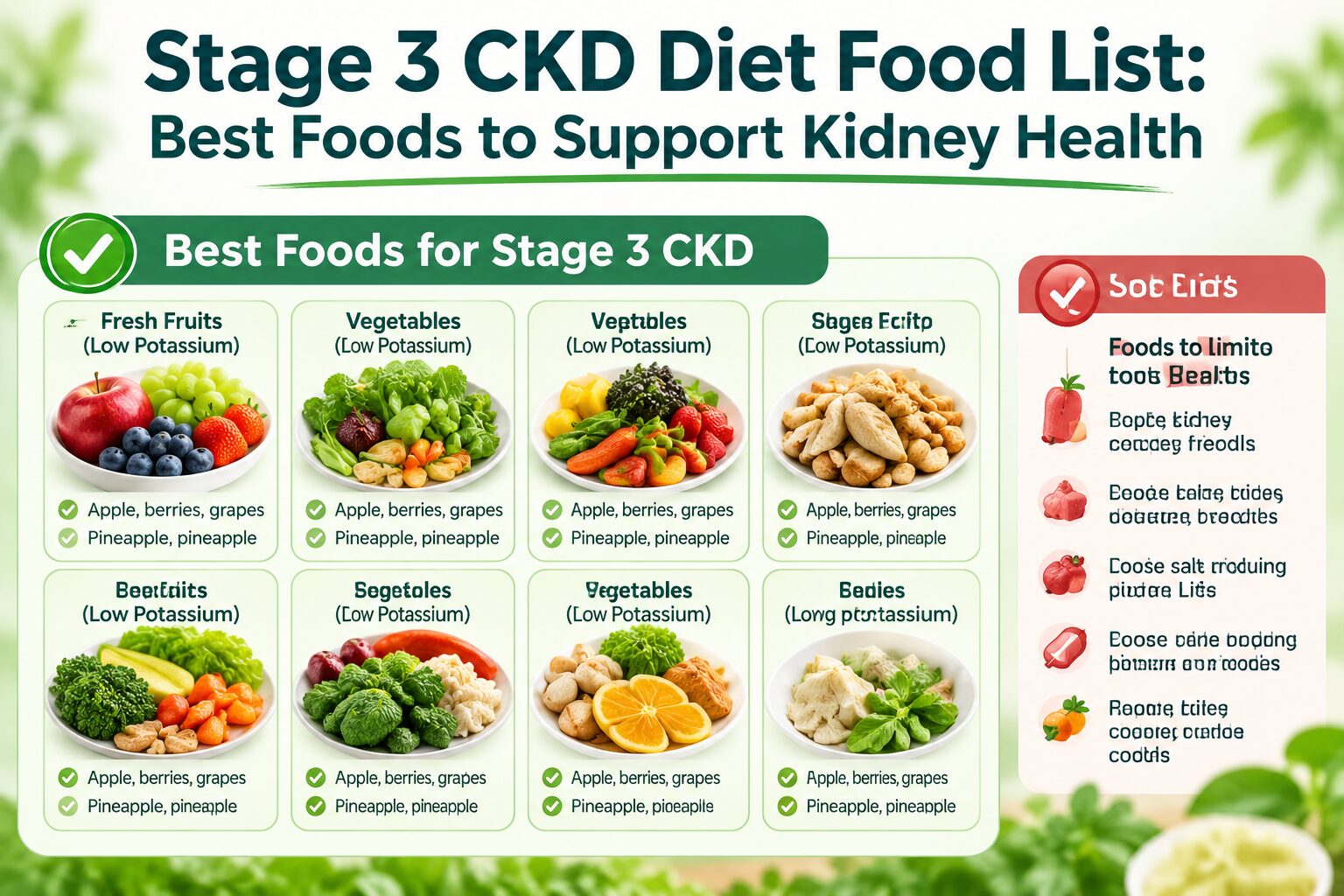
Best Foods for a Stage 3 CKD Diet Food List
Choosing kidney-friendly foods can make a major difference in overall health and kidney function.
1. Apples
Apples are low in potassium and high in fiber. They may help support digestion and heart health.
Benefits:
- Low sodium
- Rich in antioxidants
- Kidney-friendly snack option
2. Blueberries
Blueberries are packed with antioxidants that may help reduce oxidative stress.
Benefits:
- Low in potassium
- Rich in vitamins
- Supports overall wellness
3. Cabbage
Cabbage is a great vegetable for CKD patients because it is low in potassium and full of nutrients.
Benefits:
- High fiber content
- Supports digestion
- Versatile for meals
4. Cauliflower
Cauliflower is often used as a low-potassium substitute for potatoes.
Benefits:
- Rich in vitamin C
- Kidney-friendly
- Low calorie option
5. Egg Whites
Egg whites provide high-quality protein without excessive phosphorus.
Benefits:
- Supports muscle health
- Easier on the kidneys than red meat
- Low in fat
6. Fish
Certain fish contain healthy omega-3 fatty acids.
Recommended fish:
- Salmon
- Tuna
- Cod
- Trout
Benefits:
- Supports heart health
- May help reduce inflammation
7. Olive Oil
Olive oil is a healthy fat source commonly recommended in kidney-friendly diets.
Benefits:
- Heart healthy
- Anti-inflammatory properties
- Excellent for cooking
8. Garlic
Garlic adds flavor without extra salt.
Benefits:
- May support heart health
- Helps reduce sodium intake
- Rich in antioxidants
9. Strawberries
Strawberries are lower in potassium than many other fruits.
Benefits:
- High vitamin C content
- Naturally sweet
- Good snack option
10. White Rice
White rice is often preferred over brown rice for some CKD patients because it contains less phosphorus and potassium.
Benefits:
- Easy to digest
- Provides energy
- Kidney-friendly carbohydrate source
Foods to Avoid with Stage 3 CKD
Some foods may place additional stress on the kidneys.
Processed Meats
Examples:
- Bacon
- Sausage
- Hot dogs
- Deli meats
These foods are often very high in sodium and preservatives.
Fast Food
Fast food meals usually contain excessive sodium, unhealthy fats, and phosphorus additives.
Sugary Drinks
Sugary beverages may worsen diabetes and increase inflammation.
Dark-Colored Sodas
These often contain phosphorus additives that may harm kidney health.
Excess Dairy Products
Large amounts of dairy may increase phosphorus intake.
Sample One-Day Stage 3 CKD Meal Plan
Breakfast
- Oatmeal with blueberries
- Egg white omelet
- Herbal tea
Morning Snack
- Apple slices
- Unsalted crackers
Lunch
- Grilled chicken breast
- White rice
- Steamed cabbage
- Water with lemon
Afternoon Snack
- Strawberries
- Rice cakes
Dinner
- Baked salmon
- Cauliflower mash
- Cucumber salad
Evening Snack
- Low-sodium popcorn
This simple meal plan follows many kidney-friendly dietary principles.
Lifestyle Habits That Support Kidney Health
Diet works best when combined with healthy daily habits.
Stay Active
Regular exercise may help:
- Lower blood pressure
- Improve circulation
- Maintain healthy weight
- Support heart health
Stay Hydrated
Proper hydration helps the kidneys filter waste efficiently. However, some CKD patients may need fluid restrictions depending on their condition.
Avoid Smoking
Smoking damages blood vessels and reduces kidney blood flow.
Monitor Blood Pressure and Blood Sugar
High blood pressure and diabetes are major causes of CKD progression.
Can Supplements Support Kidney Wellness?
Many people with CKD also look for natural supplements that may help support kidney function and overall wellness. Some kidney support formulas contain antioxidants, herbs, vitamins, and minerals designed to complement a healthy lifestyle.
Although supplements are not a cure, some individuals report benefits such as:
- Improved energy
- Better hydration balance
- Increased wellness
- Support for healthy kidney function
It is important to choose high-quality supplements and always consult a healthcare provider before use.
Common Mistakes in CKD Diet Management
Eating Too Much Salt
Even foods that do not taste salty may contain hidden sodium.
Ignoring Portion Sizes
Large portions may overload the kidneys, even with healthy foods.
Drinking Too Little Water
Dehydration may strain kidney function.
Not Planning Meals
Meal planning helps maintain consistency and prevents unhealthy food choices.
Long-Term Benefits of a Kidney-Friendly Diet
Following a balanced stage 3 CKD diet food list consistently may help:
- Slow kidney decline
- Improve quality of life
- Reduce swelling
- Improve heart health
- Increase energy
- Lower hospitalization risks
Healthy habits today can make a meaningful difference in the future.
Final Thoughts
Living with stage 3 CKD requires commitment to healthy nutrition and lifestyle changes. A carefully planned stage 3 CKD diet food list can help reduce kidney stress, improve daily energy, and support long-term wellness.
By focusing on kidney-friendly foods, limiting sodium and processed meals, and staying consistent with healthy habits, many people can better manage CKD and improve their overall quality of life.
If you are looking for additional natural support for kidney wellness, you can learn more about a popular kidney support formula here:
👉 Learn More About This Natural Kidney Support Solution
Always consult your healthcare professional before making major dietary changes or starting any supplement program.

CKD Online Editorial Team reviews all medical content to ensure accuracy, clarity, and alignment with current clinical guidelines. Articles are updated regularly to reflect the latest evidence-based recommendations.