CKD Online Editorial Team
Last Updated: August 4, 2026 • Reading Time: 3 min
Introduction
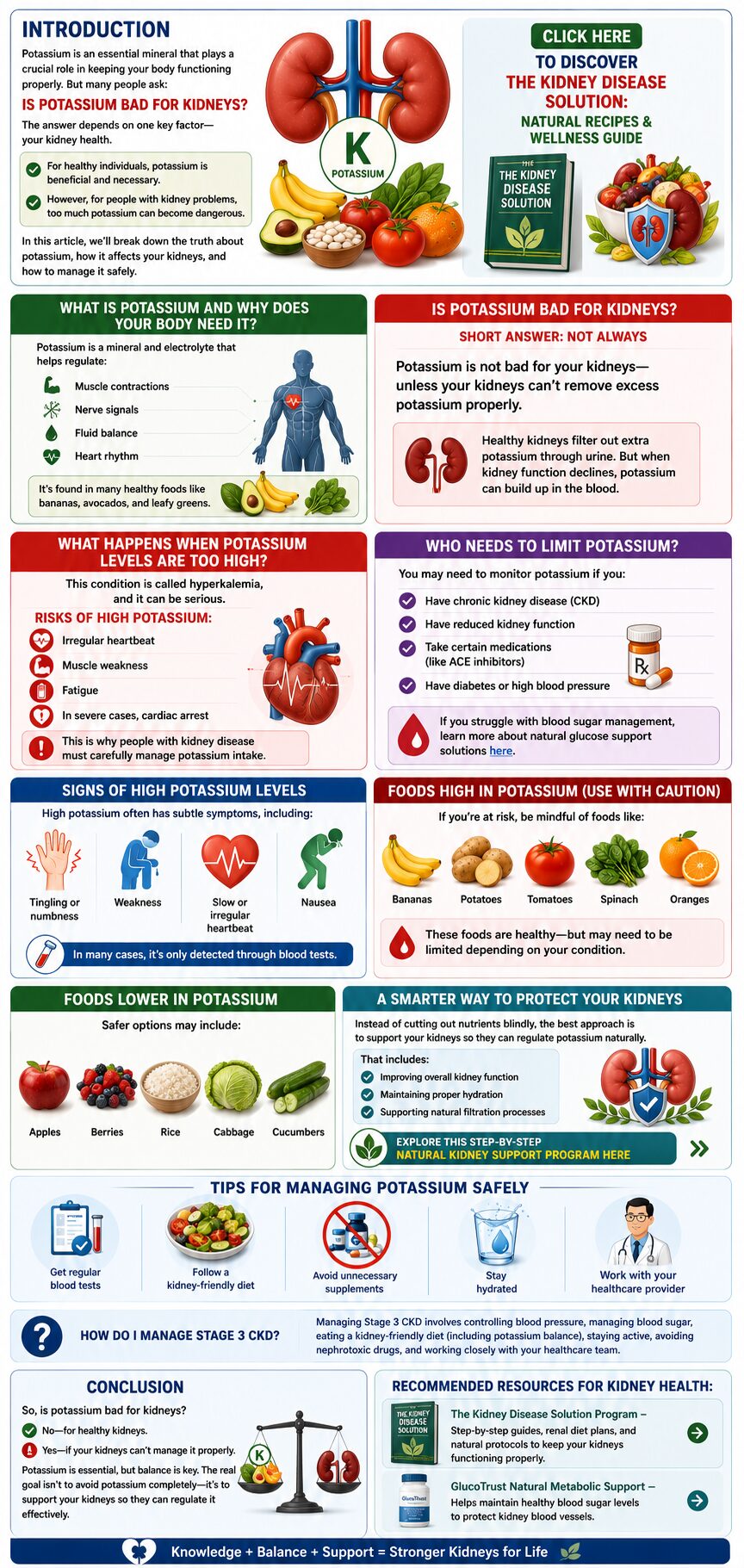
Potassium is an essential mineral that plays a crucial role in keeping your body functioning properly. But many people ask: is potassium bad for kidneys?
The answer depends on one key factor—your kidney health.
For healthy individuals, potassium is beneficial and necessary. However, for people with kidney problems, too much potassium can become dangerous.
In this article, we’ll break down the truth about potassium, how it affects your kidneys, and how to manage it safely.
👉 Click Here to Discover The Kidney Disease Solution: Natural Recipes & Wellness Guide
 What Is Potassium and Why Does Your Body Need It?
Potassium is a mineral and electrolyte that helps regulate:
- Muscle contractions
- Nerve signals
- Fluid balance
- Heart rhythm
It’s found in many healthy foods like bananas, avocados, and leafy greens.
Is Potassium Bad for Kidneys?
Short Answer: Not Always
Potassium is not bad for your kidneys—unless your kidneys can’t remove excess potassium properly.
Healthy kidneys filter out extra potassium through urine. But when kidney function declines, potassium can build up in the blood.
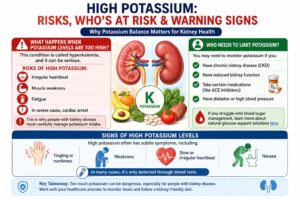 What Happens When Potassium Levels Are Too High?
This condition is called hyperkalemia, and it can be serious.
Risks of High Potassium:
- Irregular heartbeat
- Muscle weakness
- Fatigue
- In severe cases, cardiac arrest
👉 This is why people with kidney disease must carefully manage potassium intake.
Who Needs to Limit Potassium?
You may need to monitor potassium if you:
-
Have chronic kidney disease (CKD)
-
Have reduced kidney function
-
Take certain medications (like ACE inhibitors)
-
Have diabetes or high blood pressure (If you struggle with blood sugar management, learn more about natural glucose support solutions here)
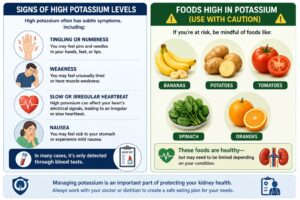 Signs of High Potassium Levels
High potassium often has subtle symptoms, including:
- Tingling or numbness
- Weakness
- Slow or irregular heartbeat
- Nausea
In many cases, it’s only detected through blood tests.
Foods High in Potassium (Use with Caution)
If you’re at risk, be mindful of foods like:
- Bananas
- Potatoes
- Tomatoes
- Spinach
- Oranges
These foods are healthy—but may need to be limited depending on your condition.
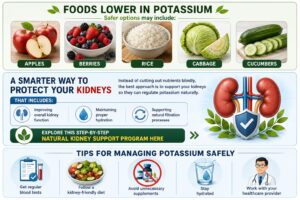 Foods Lower in Potassium
Safer options may include:
- Apples
- Berries
- Rice
- Cabbage
- Cucumbers
A Smarter Way to Protect Your Kidneys
Instead of cutting out nutrients blindly, the best approach is to support your kidneys so they can regulate potassium naturally.
That includes: ✔ Improving overall kidney function ✔ Maintaining proper hydration ✔ Supporting natural filtration processes
👉 Explore This Step-by-Step Natural Kidney Support Program Here
es
Tips for Managing Potassium Safely
- Get regular blood tests
- Follow a kidney-friendly diet
- Avoid unnecessary supplements
- Stay hydrated
- Work with your healthcare provider
- How do I manage Stage 3 CKD?
Conclusion
So, is potassium bad for kidneys? 👉
No—for healthy kidneys. 👉
Yes—if your kidneys can’t manage it properly.
Potassium is essential, but balance is key. The real goal isn’t to avoid potassium completely—it’s to support your kidneys so they can regulate it effectively.
🌿 Recommended Resources for Kidney Health:
-
📘 The Kidney Disease Solution Program – Step-by-step guides, renal diet plans, and natural protocols to keep your kidneys functioning properly.
-
🩸 GlucoTrust Natural Metabolic Support – Helps maintain healthy blood sugar levels to protect kidney blood vessels.

CKD Online Editorial Team reviews all medical content to ensure accuracy, clarity, and alignment with current clinical guidelines. Articles are updated regularly to reflect the latest evidence-based recommendations.