
CKD Online Editorial Team
Last Updated: October 15, 2026 • Reading Time: 7 min
Reaching Stage 4 Chronic Kidney Disease (CKD) represents an advanced phase in renal healthcare. Defined by an estimated Glomerular Filtration Rate (eGFR) falling between 15 and 29 mL/min, Stage 4 indicates severe kidney damage and a marked decrease in functional capacity. At this critical juncture, your kidneys struggle to clear metabolic waste, balance bodily fluids, and regulate crucial blood electrolytes independently.
While Stage 4 indicates advanced disease, a comprehensive, proactive ckd stage 4 treatment strategy can significantly slow further loss of function, relieve uremic symptoms, prevent life-threatening cardiovascular complications, and prepare you smoothly for prospective renal replacement therapy (RRT).
Primary Objectives of Stage 4 CKD Treatment
When eGFR levels decline below 30 mL/min, clinical care shifts from early prevention to intensive medical management and modality preparation. The primary objectives of ckd stage 4 treatment include:
-
Slowing Renal Progression: Preserving remaining functional nephrons through tight blood pressure, blood sugar, and metabolic control.
-
Managing Secondary Complications: Diagnosing and treating anemia, renal osteodystrophy (bone and mineral disorder), fluid overload, and metabolic acidosis.
-
Reducing Metabolic Waste Buildup: Implementing strict dietary modifications to minimize the accumulation of blood urea nitrogen (BUN) and creatinine.
-
Preparing for Modality Options: Educating patients on dialysis options (hemodialysis and peritoneal dialysis) or preemptive kidney transplantation, including surgical access planning.
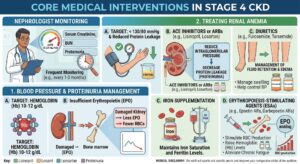 Core Medical Interventions in Stage 4 CKD
Medical management during Stage 4 requires frequent monitoring by a board-certified nephrologist. Typical pharmaceutical and clinical therapies include:
1. Blood Pressure and Proteinuria Management
Hypertension accelerates glomerulosclerosis (scarring of kidney filters).
-
ACE Inhibitors or ARBs: Medications such as lisinopril or losartan are utilized under close observation to reduce intraglomerular pressure and decrease protein leakage (proteinuria).
-
Diuretics: Loop diuretics (such as furosemide or torsemide) are frequently prescribed to manage fluid retention, swelling (edema), and blood pressure.
2. Treating Renal Anemia
Impaired kidneys produce insufficient erythropoietin (EPO), a hormone essential for stimulating red blood cell production in bone marrow.
-
Iron Supplementation: Oral or intravenous iron is administered to maintain iron saturation and ferritin levels.
-
Erythropoiesis-Stimulating Agents (ESAs): Injections such as epoetin alfa or darbepoetin alfa may be initiated to raise hemoglobin levels and alleviate chronic fatigue.
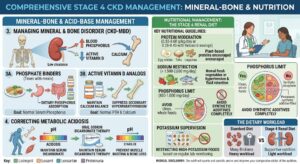 3. Managing Mineral and Bone Disorder (CKD-MBD)
As kidney clearance drops, phosphorus accumulates in the bloodstream, while active Vitamin D synthesis declines, pulling calcium out of bones.
-
Phosphate Binders: Calcium-based or non-calcium phosphate binders (such as sevelamer or lanthanum carbonate) are taken with meals to block dietary phosphorus absorption in the intestines.
-
Active Vitamin D Analogs: Calcitriol or paricalcitol helps maintain calcium balance and suppress secondary hyperparathyroidism.
4. Correcting Metabolic Acidosis
Inability to excrete hydrogen ions leads to metabolic acidosis, which worsens muscle wasting and bone loss. Oral sodium bicarbonate therapy is commonly prescribed to maintain serum bicarbonate within safe levels.
Nutritional Management: The Stage 4 Renal Diet
Medical Nutrition Therapy (MNT) is a vital pillar of ckd stage 4 treatment. Adjusting dietary intake reduces the metabolic workload on compromised kidneys.
Key Nutritional Guidelines:
-
Strict Protein Moderation: Non-dialysis Stage 4 guidelines recommend restricting daily protein to 0.55–0.60 grams per kilogram of body weight per day (or 0.28–0.43 g/kg/day supplemented with ketoacid analogs). Plant-based proteins (tofu, legumes in controlled portions) are encouraged because they produce fewer acidic wastes.
-
Sodium Restriction: Limiting sodium intake to less than 1,500–2,000 mg/day helps control hypertension and fluid retention.
-
Phosphorus Limit: Keeping dietary phosphorus between 800 and 1,000 mg/day and avoiding synthetic phosphate additives completely.
-
Potassium Supervision: Restricting high-potassium foods based on regular laboratory monitoring to prevent hyperkalemia.
Stage 4 CKD Food Matrix: What to Eat vs. What to Avoid
| Food Category | Low-Risk Choices (Include Regularly) | High-Risk Options (Strictly Limit or Avoid) |
| Proteins | Egg whites, skinless poultry breast, fresh white fish (cod, tilapia), firm tofu | Processed deli meats, bacon, sausage, organ meats, canned salted meats |
| Vegetables | Cabbage, cauliflower, bell peppers, cucumbers, green beans, radishes, zucchini | Potatoes, sweet potatoes, tomatoes, cooked spinach, winter squash |
| Fruits | Apples, blueberries, raspberries, blackberries, cranberries, grapes, pears | Bananas, oranges, kiwis, cantaloupe, dried fruits, avocados |
| Grains | Sourdough bread, white rice, refined pasta, couscous, cream of wheat | High-phosphorus bran cereals, whole wheat breads (if phosphorus is high) |
| Beverages | Pure water, cranberry juice, clear apple juice, unsweetened tea | Dark colas (containing phosphoric acid), energy drinks, high-potassium juices |
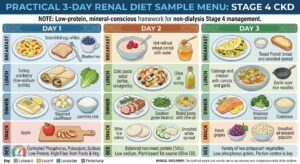 Practical 3-Day Sample Diet Menu for CKD Stage 4
Note: This sample plan offers a low-protein, mineral-conscious framework tailored for non-dialysis Stage 4 management.
Day 1
-
Breakfast: 2 scrambled egg whites cooked with diced red bell peppers and scallions, served with 1 slice of white sourdough toast with unsalted spread. 1 cup of fresh blueberries.
-
Lunch: Turkey cranberry wrap made with a low-sodium white tortilla, 2 oz of sliced oven-roasted turkey breast, shredded lettuce, and a light spread of cranberry sauce.
-
Dinner: 2 oz of baked cod seasoned with fresh lemon juice and dill, served alongside 1 cup of steamed cauliflower florets and 1 cup of boiled jasmine rice.
-
Snack: 1 small red apple sliced with a dusting of cinnamon.
Day 2
-
Breakfast: Hot refined wheat cereal (Cream of Wheat) made with water, stirred with 1 teaspoon of honey and topped with fresh raspberries.
-
Lunch: Cold pasta salad featuring white pasta, diced red bell peppers, cucumbers, black olives, and 2 oz of firm tofu cubes dressed with an olive oil vinaigrette.
-
Dinner: 2 oz of grilled pork tenderloin seasoned with garlic and rosemary, served with sautéed green beans and a side of boiled pasta tossed in olive oil and fresh parsley.
-
Snack: Unsalted white rice cakes or cucumber slices with a low-sodium spread.
Day 3
-
Breakfast: Egg white omelet filled with diced zucchini and yellow squash. 1 slice of toasted French bread with unsalted spread.
-
Lunch: Cabbage and chicken stir-fry with 2 oz of diced chicken breast, shredded green cabbage, carrots, and sliced garlic sautéed in olive oil, served over rice noodles.
-
Dinner: 2 oz of baked wild salmon with lemon and olive oil, served alongside steamed broccoli florets and white couscous.
-
Snack: Fresh grapes or unsalted air-popped popcorn.
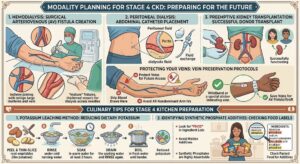 Modality Planning: Preparing for the Future
A critical aspect of ckd stage 4 treatment involves preparing for potential kidney failure (Stage 5) before urgent intervention is needed.
1. Education and Choice
Patients work with their healthcare team to evaluate future options:
-
Hemodialysis: Requires surgical creation of an arteriovenous (AV) fistula or graft in the arm, ideally months before dialysis starts.
-
Peritoneal Dialysis: Requires placement of a peritoneal catheter in the abdomen.
-
Preemptive Kidney Transplantation: Seeking a living donor for transplantation prior to initiating dialysis yields optimal long-term clinical outcomes.
2. Protecting Your Veins
If hemodialysis is selected, protecting arm veins becomes vital. Patients in Stage 4 should request “vein preservation” protocols—avoiding IV lines and blood draws in the non-dominant arm to save veins for future AV fistula creation.
Culinary Tips for Stage 4 Kitchen Preparation
1. Potassium Leaching Method
To reduce potassium levels in root vegetables like potatoes or carrots:
-
Peel and thin-slice the vegetables.
-
Rinse under warm running water.
-
Soak in warm water for at least 2 hours (using a 10:1 ratio of water to vegetable).
-
Drain, rinse again, and boil in fresh water before serving.
2. Identifying Synthetic Phosphate Additives
Always inspect food labels for words containing “PHOS” (such as dicalcium phosphate, monosodium phosphate, or phosphoric acid). Synthetic additives are absorbed rapidly and increase metabolic stress on impaired kidneys.
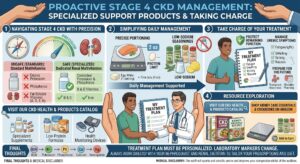 Specialized Support Products for Stage 4 Care
Navigating Stage 4 CKD requires precision in food intake, daily supplement adherence, and symptom monitoring. Standard multivitamins are often unsafe for Stage 4 patients because they contain excess potassium, phosphorus, or fat-soluble vitamins (like Vitamin A).
Utilizing dedicated renal multivitamins, digital kitchen scales for precise protein portioning, low-sodium seasonings, and health tracking tools simplifies daily management while supporting your treatment plan.
Take Charge of Your Stage 4 Treatment Today
Taking an active, informed role in your ckd stage 4 treatment is the single best way to protect your remaining kidney function, manage uremic symptoms, and prepare confidently for the future.
-
Explore Specialized CKD Care Products: Discover targeted supplements, low-protein nutritional formulas, and health monitoring tools designed specifically for kidney support by visiting our CKD Health & Products Catalog.
-
Renal Cookbooks & Kitchen Tools on Amazon: Simplify meal preparation, portion control, and kidney-friendly cooking using expert-tested cookbooks, digital scales, and low-sodium seasonings. Check out top options on Amazon: Shop Kidney Care Essentials and Cookbooks on Amazon.
Final Thoughts & Medical Disclaimer
Every individual’s ckd stage 4 treatment plan must be personalized. Laboratory markers—such as eGFR, serum creatinine, blood urea nitrogen (BUN), potassium, phosphorus, calcium, and hemoglobin—change over time and dictate specific medical needs. Always work directly with a board-certified nephrologist and a registered renal dietitian to tailor your medical prescriptions, lifestyle habits, and diet based on your latest blood work.

CKD Online Editorial Team reviews all medical content to ensure accuracy, clarity, and alignment with current clinical guidelines. Articles are updated regularly to reflect the latest evidence-based recommendations.