Gout and kidney stones are two painful health conditions that often share a common cause: high uric acid levels. Many people wonder, can gout lead to kidney stones? The answer is yes. In fact, individuals with gout have a higher risk of developing certain types of kidney stones, especially uric acid stones.
Understanding the connection between gout and kidney stones is important because both conditions may also increase the risk of chronic kidney disease (CKD) over time. The good news is that healthy lifestyle choices, proper hydration, diet changes, and kidney-supportive habits may help reduce complications and improve overall health.
In this comprehensive guide, you’ll learn:
- What gout is
- How gout can lead to kidney stones
- Symptoms to watch for
- Risk factors
- Treatment options
- Diet recommendations
- Natural ways to support kidney health
What Is Gout?
Gout is a form of inflammatory arthritis caused by excess uric acid in the bloodstream.
Normally, uric acid dissolves in the blood and leaves the body through urine. However, when uric acid levels become too high, sharp crystals can form inside joints, causing severe pain and inflammation.
The condition commonly affects:
- The big toe
- Ankles
- Knees
- Fingers
- Wrists
Gout attacks can occur suddenly and may cause:
- Intense joint pain
- Redness
- Swelling
- Warmth around joints
What Are Kidney Stones?
Kidney stones are hard mineral deposits that form inside the kidneys. These stones can vary in size and may cause severe pain when passing through the urinary tract.
Several types of kidney stones exist, including:
- Calcium oxalate stones
- Uric acid stones
- Struvite stones
- Cystine stones
People with gout are especially prone to uric acid kidney stones.
Can Gout Lead to Kidney Stones?
Yes, gout can increase the risk of kidney stones.
The connection occurs because both conditions are linked to elevated uric acid levels.
When too much uric acid builds up in the body:
- Crystals may collect in joints, causing gout
- Uric acid may also crystallize in the kidneys, forming stones
This is why many people with gout eventually experience kidney stone problems.
How Uric Acid Causes Kidney Stones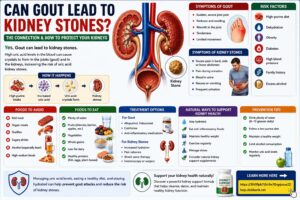
When urine becomes too acidic, uric acid may harden into crystals inside the kidneys.
Over time, these crystals can combine and form stones.
The risk becomes higher when a person:
- Does not drink enough water
- Eats a high-purine diet
- Has obesity
- Has diabetes
- Has metabolic syndrome
- Consumes excessive alcohol
The kidneys must work harder to remove excess uric acid, which may also contribute to kidney damage over time.
Symptoms of Kidney Stones
Kidney stones can be extremely painful.
Common symptoms include:
- Severe pain in the back or side
- Pain during urination
- Blood in urine
- Frequent urination
- Nausea and vomiting
- Cloudy urine
- Fever in severe cases
Small stones may pass naturally, while larger stones sometimes require medical treatment.
Risk Factors for Gout and Kidney Stones
Several factors increase the likelihood of developing both conditions.
High-Purine Diet
Purines are substances found in many foods. The body breaks purines down into uric acid.
Foods high in purines include:
- Red meat
- Organ meats
- Shellfish
- Sugary drinks
- Alcohol
Obesity
Excess weight increases uric acid production and places additional stress on the kidneys.
Dehydration
Not drinking enough water concentrates urine and increases stone formation risk.
Diabetes
High blood sugar may affect kidney function and uric acid balance.
Family History
Genetics can increase susceptibility to both gout and kidney stones.
Can Gout and Kidney Stones Damage the Kidneys?
Yes. Repeated kidney stones and uncontrolled gout may increase the risk of chronic kidney disease.
Kidney stones can:
- Block urine flow
- Cause infections
- Damage kidney tissue
Meanwhile, persistently high uric acid levels may contribute to inflammation and reduced kidney function.
This is why early management is extremely important.
Foods to Avoid With Gout and Kidney Stones
Diet plays a major role in preventing uric acid buildup.
Avoid High-Purine Foods
These include:
- Red meat
- Liver
- Sardines
- Anchovies
- Shellfish
Limit Sugary Drinks
Sugary beverages and high-fructose corn syrup may raise uric acid levels.
Reduce Alcohol
Beer and liquor are strongly associated with gout attacks.
Avoid Excess Salt
Too much sodium may increase kidney stone risk and strain kidney function.
Best Foods for Gout and Kidney Health
Healthy eating may help lower uric acid levels and support kidney function.
Drink Plenty of Water
Hydration helps dilute urine and reduce stone formation.
Eat More Fruits and Vegetables
Many fruits and vegetables contain antioxidants that support overall health.
Good choices include:
- Cherries
- Apples
- Berries
- Cucumbers
Choose Healthy Proteins
Better protein options include:
- Fish in moderation
- Eggs
- Plant proteins
- Skinless chicken
Consume Whole Grains
Whole grains provide fiber and support metabolic health.
Treatment Options for Gout and Kidney Stones
Treatment depends on the severity of symptoms and stone size.
Medications for Gout
Doctors may prescribe:
- Allopurinol
- Febuxostat
- Colchicine
- Anti-inflammatory medications
These treatments help lower uric acid and reduce flare-ups.
Kidney Stone Treatment
Small stones often pass naturally with hydration.
Larger stones may require:
- Shock wave therapy
- Ureteroscopy
- Surgical removal
Natural Ways to Support Kidney Health
Many people seek natural ways to support kidney wellness and healthy uric acid balance alongside medical care.
Helpful habits include:
- Staying hydrated
- Eating anti-inflammatory foods
- Maintaining healthy weight
- Exercising regularly
- Limiting processed foods
- Reducing alcohol intake
- Managing blood sugar levels
Some individuals also explore nutritional support products designed to promote healthy kidney function naturally.
If you would like to learn more about a natural kidney support option, you can visit:
Natural Kidney Support Formula
This type of nutritional support is commonly used by people seeking additional support for kidney wellness and urinary health.
How to Prevent Kidney Stones if You Have Gout
Prevention is one of the best strategies.
Stay Hydrated
Drinking enough water may help flush excess uric acid from the body.
Maintain Healthy Weight
Weight management can improve uric acid balance and metabolic health.
Follow a Kidney-Friendly Diet
Balanced nutrition supports both kidney and joint health.
Monitor Uric Acid Levels
Regular blood tests can help track progress.
Follow Medical Advice
Take prescribed medications consistently.
Is Gout a Warning Sign of Kidney Problems?
In some cases, yes.
People with gout may have a higher risk of:
- Kidney stones
- Chronic kidney disease
- Reduced kidney function
This does not mean everyone with gout will develop kidney disease, but monitoring kidney health is important.
Lifestyle Tips for Better Kidney Health
Exercise Regularly
Physical activity supports circulation and metabolic health.
Quit Smoking
Smoking may worsen kidney damage and inflammation.
Reduce Processed Foods
Whole foods are generally better for kidney health.
Manage Blood Pressure
High blood pressure can worsen kidney disease risk.
When Should You See a Doctor?
Seek medical attention if you experience:
- Severe joint pain
- Blood in urine
- Fever
- Persistent kidney pain
- Difficulty urinating
- Frequent gout attacks
Early diagnosis and treatment may help prevent complications.
Final Thoughts
So, can gout lead to kidney stones?
Yes. High uric acid levels associated with gout can contribute to the formation of uric acid kidney stones and may increase the risk of kidney complications over time.
Fortunately, healthy lifestyle changes, proper hydration, balanced nutrition, and early treatment may help reduce risk and support better kidney health.
If you are interested in additional natural support for kidney wellness, you can learn more here: